The Toyota bZ7 2026 range battery charging speed review needs a stricter method than repeating a launch slide. The important questions are simple: which battery version is being tested, what software build is installed, how warm is the pack, and how much energy actually reaches the vehicle? Until independent road tests publish repeatable results, a confident number is usually a specification claim, not evidence.
That distinction matters because electric-car range and charging performance are highly conditional. A vehicle can deliver an impressive laboratory figure and still lose substantial distance at highway speed, in cold weather, or with a full cabin. This review therefore treats the bZ7 as a data problem. The useful result is not one heroic maximum, but a range of outcomes tied to speed, temperature, battery state of charge, and charging hardware.
Toyota bZ7 2026 range battery charging speed review: Establishing the baseline
Start with the configuration. Battery capacity, drive layout, wheel size, and trim can all change consumption. A rear-wheel-drive version on smaller wheels should not be compared directly with an all-wheel-drive model using wider tires. The same warning applies to software. A vehicle running an early calibration could display different consumption, charging behavior, or remaining-range estimates after an over-the-air update.
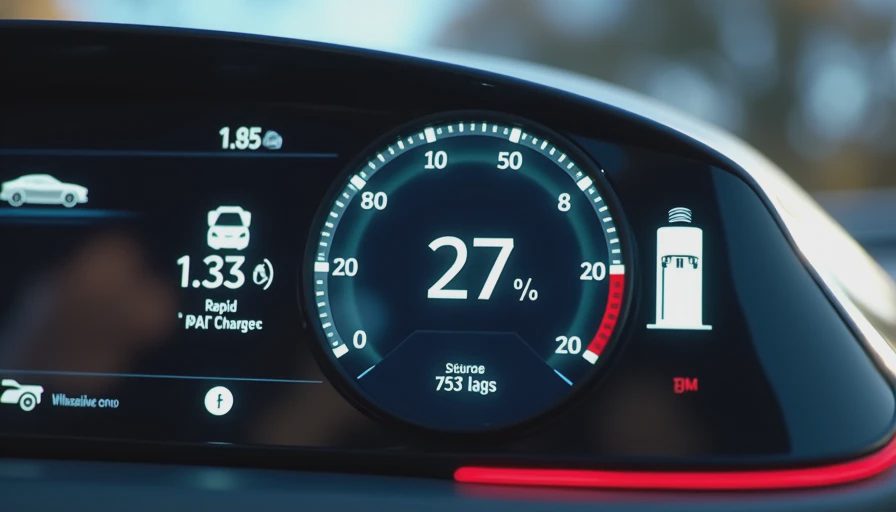
The first evidence record should include the vehicle identification details, battery percentage at departure, odometer reading, tire pressures, outside temperature, route elevation, HVAC setting, and installed software version. Photographing the instrument cluster before and after a drive is more useful than a vague statement that the car felt efficient. The dashboard estimate is a prediction; the wall-meter or charger energy figure is closer to the physical input.
For buyers, the practical baseline is a highway loop at a steady 65 to 70 mph, followed by a mixed-use route with urban traffic. Record miles driven and displayed energy consumption. Then compare those figures with usable battery energy rather than only the advertised pack size. Charging losses mean the electricity drawn from a station will exceed the energy stored in the battery, often by a noticeable margin.
Real-world range: speed, weather, and software behavior
The most useful Toyota bZ7 2026 range battery charging speed review should separate city range from highway range. Low-speed urban driving allows more regenerative braking and less aerodynamic drag. Highway travel reverses that advantage. Air resistance rises quickly with speed, so a trip at 75 mph can consume substantially more energy than the same trip at 60 mph, especially with cold tires and a strong headwind.
Temperature adds another layer. In freezing conditions, the cabin heater and battery conditioning consume energy before the vehicle has covered meaningful distance. A preconditioned car connected to a charger can begin a winter trip in a better position than one warmed solely from the battery. Summer heat can also increase consumption through air conditioning, though the effect is often different from the combined heating and battery-warming penalty seen in cold weather.
The range display deserves its own audit. Drive 100 miles, note the actual battery percentage used, and calculate projected full-pack distance from that consumption. Repeat the same process on a separate route. If the display says 280 miles remaining but the measured rate implies 235 miles under current conditions, the gap is not necessarily a defect; it may reflect a rolling estimate based on earlier driving. A technically honest review reports both numbers.
Battery capacity and degradation questions
A new-car review cannot prove long-term degradation, but it can establish a reference point. Record the battery percentage before and after charging, the energy delivered by the charger, and the time spent at each charging stage. The result should identify whether the test concerns gross capacity, usable capacity, or energy purchased from the grid. Those are different measurements and should never be presented as interchangeable.
Repeated tests also reveal whether the battery management system is conservative near the top and bottom of the gauge. Many electric vehicles reduce charging power as the battery approaches full to protect the cells and manage heat. A test that averages the entire session can hide this taper. For trip planning, the useful figure is often the time needed to move from 10 to 80 percent, not the time needed to reach 100 percent.
Owners should log software updates alongside battery observations. A revised energy-management calibration can change displayed range without changing the physical pack. That is why the Toyota bZ7 2026 range battery charging speed review should name the software version whenever it quotes a result. Otherwise, two apparently conflicting reports may simply describe different firmware states.
DC charging speed: the curve matters more than the peak
Peak charging power attracts attention, but the charging curve determines trip time. A car that briefly reaches a high rate and then tapers early can take longer from 10 to 80 percent than a car with a lower but steadier curve. The Toyota bZ7 2026 range battery charging speed review should therefore publish power at several points, such as 10, 20, 40, 60, and 80 percent, along with pack temperature and charger output.
Station limits matter too. A high-power charger cannot give the vehicle more power than its onboard charging system accepts, and a shared cabinet can divide output between stalls. Battery preconditioning is equally important. If navigation is set to a compatible fast charger, the vehicle may prepare the pack before arrival. Arriving cold can produce a slow first ten minutes and make the car look worse than it performs under prepared conditions.
For a driver planning a 500-mile trip, the meaningful question is not whether the bZ7 can display a peak number. It is how many miles can be added during a 15- or 25-minute stop. Convert energy added into estimated miles using the measured consumption from the actual route. This produces a more honest answer than quoting a laboratory maximum with no temperature or speed context.
How the bZ7 should be compared with rivals
A useful comparison keeps the method constant. Test the Toyota bZ7 2026 range battery charging speed review against vehicles such as the Tesla Model Y, Hyundai Ioniq 5, Kia EV6, or Volkswagen ID.7 on the same route, in similar weather, and with comparable battery percentages. Comparing one manufacturer’s official range with another vehicle’s independent winter result creates a chart that looks precise but proves very little.
Look at three ownership metrics: highway miles per usable kilowatt-hour, minutes required to add 150 miles, and charging-network reliability on the intended route. Purchase price, warranty coverage, rear-seat space, and driver-assistance behavior also belong in the decision. A faster charger is less valuable if the preferred route has limited compatible stations or if the vehicle repeatedly limits power because of temperature.
The cleanest report includes raw observations before interpretation. State the route, average speed, outside temperature, battery percentage, charger model, software version, and session duration. Then explain the conclusion. Engineers will appreciate the reproducibility, while ordinary buyers get a result they can actually apply to a commute or road trip.
Buying guidance and the evidence still needed
At publication, treat every Toyota bZ7 2026 range battery charging speed review as provisional unless it includes independently measured consumption and a complete charging curve. Confirm the exact battery and drivetrain before using a quoted range figure for a purchase decision. Ask whether the result came from a controlled test, a manufacturer specification, or a driver’s short trip. Those sources answer different questions.
A sensible buyer should also check home-charging requirements, included cable equipment, public charging access, and the location of service support. A household with overnight charging may care more about dependable 120-volt or Level 2 behavior than about a dramatic DC peak. A frequent road-tripper should prioritize sustained fast charging, accurate trip planning, and predictable preconditioning.
The final Toyota bZ7 2026 range battery charging speed review will be strongest when several independent tests converge. Until then, use the published figures as hypotheses, not promises. Log the software build, measure energy rather than trusting the dashboard alone, and compare like with like. That approach is less exciting than a single headline number, but it is far more useful when the charging station is 40 miles away and the battery gauge has started practicing creative writing.


No letters yet — be the first guest to write.