A used electric car battery health check should produce evidence, not a reassuring sentence from a salesperson. For an EV, the traction battery is the most expensive component and the one most difficult to evaluate from a quick walk-around. You need mileage, charging history, software data, temperature context, and a repeatable test. Treat the inspection like a small lab exercise: record the vehicle identification number, odometer reading, battery percentage, outside temperature, and software version before drawing conclusions.
What battery health actually means
Battery health is usually discussed as state of health, or SOH. A battery showing 90% SOH can hold roughly 90% of its original usable energy, although manufacturers calculate and display this value differently. Usable capacity is not always the same as the battery pack’s total physical capacity because the vehicle reserves a buffer at the top and bottom of the charge range.
Range shown on the dashboard is not a direct capacity measurement. It is an estimate based on recent driving, weather, speed, climate use, tire pressure, and sometimes the selected drive mode. A car that predicts 180 miles after a week of highway driving has not necessarily lost a major portion of its battery. Conversely, a flattering range estimate does not prove the pack is healthy.
The practical goal is to compare expected usable capacity with observed energy consumption. If an EV uses 30 kilowatt-hours per 100 miles and displays 210 miles at a full charge, the implied usable energy is about 63 kWh. That calculation is only an estimate, but it is more informative than staring at the range number alone.
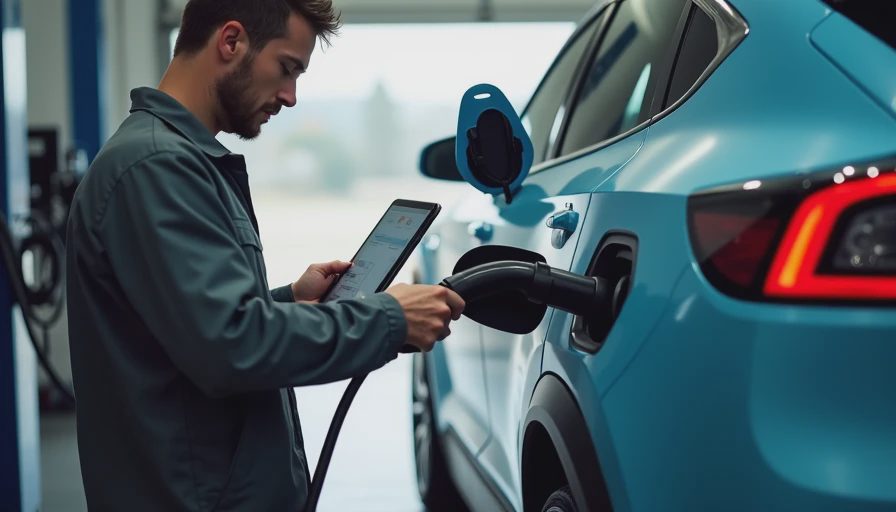
How to perform a used electric car battery health check
Start with documentation. Ask for service records, battery warranty terms, previous diagnostic reports, and evidence of abnormal charging events. A dealer should be able to provide the VIN and allow an independent inspection. Record whether the car uses a lithium-ion nickel-manganese-cobalt pack, lithium iron phosphate pack, or another chemistry if that information is available. Chemistry affects charging behavior and degradation patterns.
Next, inspect the vehicle with an EV-capable scan tool or a professional diagnostic service. Generic code readers often miss battery management system data. Look for reported SOH, maximum cell voltage deviation, minimum cell voltage, battery temperature spread, charge-cycle count, and fault codes. A small amount of cell variation under light load can be normal. Large or rapidly changing differences deserve investigation because they can indicate imbalance, a weak module, or a sensor problem.
Record the pack percentage and estimated remaining energy at the start of the test. Drive a repeatable route of at least 20 to 30 miles, preferably with mixed city and highway speeds. Avoid comparing two cars on different days in radically different weather. Cold temperatures can reduce available power and regenerative braking, while high cabin heat or air-conditioning use increases consumption. After the drive, record the same data again and compare energy used with miles traveled.
Reading charging behavior instead of guessing
Charging behavior supplies another useful signal. Ask the seller to begin the inspection with enough charge to test the car, then observe AC charging if practical. A Level 2 session should show a reasonably stable rate until the vehicle approaches its charging taper. A sudden, unexplained reduction in power at a moderate state of charge can justify further diagnosis, although the vehicle may also be protecting a cold or hot battery.
For DC fast charging, note the battery percentage, charger output, pack temperature if available, and time required to reach the next ten or twenty percentage points. Do not compare a small city EV with a large luxury crossover as though they share the same charging curve. Compare the result with the manufacturer’s published capability for that model year and battery size.
Repeated fast charging is not automatically harmful, and occasional slow charging is not proof of careful ownership. The useful evidence is a pattern: warning messages, persistent charging limits, failed sessions, unusually wide cell differences, or a car that cannot deliver its documented charging performance under suitable conditions.
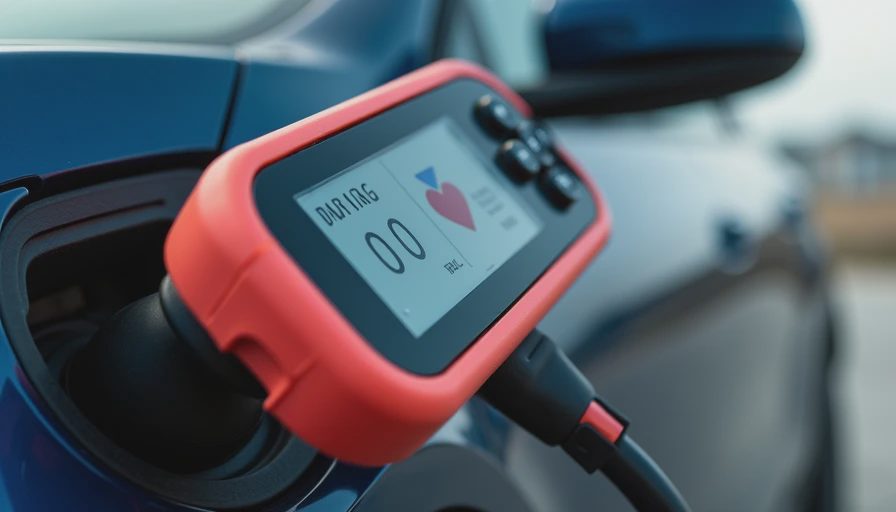
Warning signs that deserve a hard pause
A battery warning light is the obvious concern, but software behavior can reveal trouble before a warning appears. Watch for an inaccurate state-of-charge display, abrupt percentage drops, limited regenerative braking, inconsistent estimated range, or a power reduction message. Rebooting the infotainment system will not repair a battery module; it only makes the dashboard quieter for a few minutes.
Inspect the underside for impact damage, missing fasteners, corrosion, or signs that the battery enclosure has been opened. A collision, flood, or poorly repaired underbody can create expensive risks even when the car drives normally. Ask whether the vehicle has been stored for long periods at a very high or very low charge level. The answer is not definitive, but it adds context to the diagnostic record.
Use the warranty, not hope, as part of the calculation. Many EV manufacturers provide a separate battery warranty with a time and mileage limit, often including a minimum capacity threshold. Terms differ by brand, model, market, and model year. Confirm what transfers to the next owner, what documentation is required, and whether a replacement covers the full pack or only a failed module.
Connect battery evidence to ownership cost
A used electric car battery health check matters to insurance planning as well as purchase price. Comprehensive and collision coverage can help address covered damage to the vehicle, including certain collision, theft, weather, or fire losses, but a policy generally does not function as a battery degradation warranty. Normal capacity loss and mechanical wear are separate from sudden physical damage.
When requesting quotes, provide the exact trim, battery size, model year, and annual mileage. A higher-value EV can carry different repair and replacement costs than an entry-level model. Ask about original equipment parts, total-loss valuation, rental coverage, roadside assistance, and whether specialized EV towing is available. Compare quotes from carriers such as Progressive, GEICO, State Farm, and regional insurers, but compare the coverage limits and deductibles rather than choosing solely on the monthly premium.
A $1,000 collision deductible can make a modest repair manageable, while a higher deductible can reduce the premium but increase the cash required after an incident. The best quote is the one that matches the vehicle’s replacement value and your ability to absorb a large repair bill.
A practical decision record
Write the findings into one page before negotiating. Include the VIN, mileage, SOH reading, battery chemistry, software version, scan-tool name, test route, outside temperature, start and end charge, energy consumption, charging observations, visible damage, warranty status, and quoted insurance premium. Screenshots are useful, but a timestamped report from an EV specialist is stronger evidence.
If the battery data is healthy and consistent, use that result to support a price based on the car’s age, condition, tires, brakes, and remaining warranty. If the seller refuses an independent inspection, treats diagnostic data as confidential, or offers only a range screenshot, price the vehicle as an unknown-risk purchase. That does not automatically make it a bad car; it means the uncertainty belongs in the negotiation.
The strongest used electric car battery health check is repeatable, documented, and separated from sales pressure. Spend an hour collecting measurements now rather than discovering later that a mysterious 20% range drop is your newest monthly expense. Once the battery evidence is clear, obtain insurance quotes using the exact vehicle details and proceed only when the total ownership picture makes technical and financial sense.



No letters yet — be the first guest to write.