The longest range electric suv 2026 shoppers can buy will not be identified by a glossy dashboard animation or a dramatic launch video. It will be identified by a repeatable test, a clear battery specification, and software that reports energy use without inventing a cheerful fiction. Published range figures are useful, but they are only the first line in a log file.
For this guide, the useful question is not simply which SUV claims the biggest number. It is which vehicle combines credible EPA range, predictable highway performance, acceptable charging time, and an ownership interface that does not hide important data behind three menus. Future model-year details can change before delivery, so treat announced figures as targets until certification and customer testing catch up.
Establishing the range leaderboard
The likely contenders include large SUVs and electric trucks with unusually large battery packs. Lucid Gravity has been positioned around a range target above 400 miles in its most efficient configurations, while the Rivian R1S with a Max battery has offered an EPA estimate around 410 miles in certain configurations. Chevrolet Silverado EV versions have also advertised figures near or above 450 miles, although a pickup is not a direct SUV comparison. The GMC Sierra EV belongs in the same measurement conversation.
Among conventional premium SUVs, Tesla Model X, Mercedes-Benz EQS SUV, and Hyundai Ioniq 9 occupy a different band. Their official figures depend heavily on wheel size, drivetrain, trim, and testing cycle. A seven-seat SUV with 21-inch wheels can lose meaningful range against a lighter, narrower-wheel configuration before the owner has driven a single mile.
That is why the longest range electric suv 2026 result should be recorded with trim, wheels, battery, seating configuration, and software version. A headline number without those fields is a partial measurement, not a conclusion.
EPA range is a baseline, not a promise
EPA range is more useful than an unqualified manufacturer estimate because it follows a defined test procedure. It still does not recreate every trip. Sustained speeds above 70 mph, cold temperatures, roof cargo, strong headwinds, steep grades, and winter tires can all reduce usable distance. Heating the cabin also has a larger penalty than cooling it in many conditions because electric resistance heating can draw substantial power.
A practical buyer should translate the official figure into a travel buffer. If an SUV is rated for 450 miles, planning a 330- to 360-mile highway leg without charging is more realistic than treating 450 as a guaranteed endpoint. That buffer protects against weather, traffic, detours, and the final stretch where drivers become irrationally interested in the nearest charging station.
For the longest range electric suv 2026 search, compare watt-hours per mile as carefully as battery capacity. A large battery can produce impressive range, but efficient motors, low rolling resistance, thermal management, and aerodynamic design determine how much of that stored energy reaches the road.
Charging changes the ownership calculation
Range is only half the road-trip equation. A vehicle that travels 380 miles but adds 200 miles in 18 minutes can be more useful than one that travels 430 miles and needs a long pause after every fast-charge session. Look for peak charging power, the time spent near that peak, and the charge curve from 10% to 80%. One impressive peak number is not a charging strategy.
Connector access also matters in 2026. A vehicle using the North American Charging Standard can access a growing Tesla Supercharger network when the manufacturer has enabled the necessary hardware and software. Other vehicles may rely on adapters or a separate fast-charging network. Confirm whether an adapter is included, whether route planning preconditions the battery, and whether the navigation system can identify chargers with live status.
The best longest range electric suv 2026 candidate should show battery temperature, predicted arrival state of charge, and charger availability in a way a driver can audit. If the car claims 12% arrival but reaches the station at 4%, that is not a charming personality trait; it is a navigation defect.
Software is part of the range specification
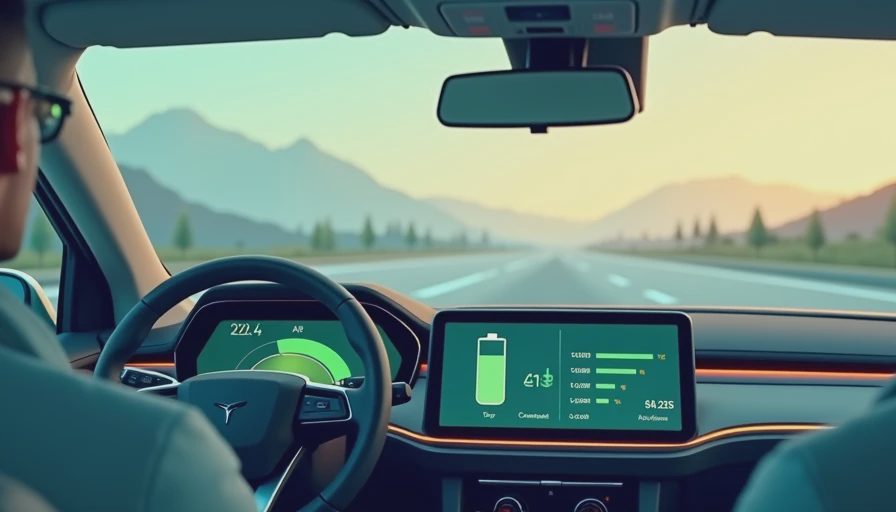
Smart cockpit behavior affects energy confidence. A useful system should distinguish projected range from a fixed regulatory estimate, explain recent efficiency, and show whether climate control, elevation, or speed changed the prediction. OTA updates should improve the model without silently changing the displayed methodology.
Before buying, record the operating system version and test the route planner on a familiar 100-mile trip. Enter a destination with a fast charger, activate battery preconditioning, cancel the route, and create it again. Note whether preconditioning remains active. Test voice commands while the cabin fan is running. These are simple reproduction steps, but they expose whether the interface is engineered for driving or merely demonstrated on a stage.
A buyer comparing the longest range electric suv 2026 options should also inspect recall notices, update history, and owner reports tied to firmware versions. A complaint saying “range is bad” is weak evidence. A log showing outside temperature, starting state of charge, route elevation, wheel package, software version, and consumption is much stronger.
A repeatable comparison method
Start with the exact trim you can purchase. Record EPA range, battery size if published, curb weight, wheel diameter, drivetrain, and seating layout. Then estimate highway range using an 80% planning factor for mild conditions. Use a lower factor for freezing temperatures, heavy cargo, or sustained mountain driving.
Next, calculate charging time for your actual routes. A household with a 240-volt Level 2 charger may rarely need public charging during the week. A renter or apartment resident should prioritize reliable fast charging, payment compatibility, and station density over a theoretical extra 30 miles. A three-row vehicle used for school runs has a different duty cycle from one used for interstate travel.
Finally, price the entire system. Home electrical work can cost roughly $500 to $2,000 or more depending on panel capacity and distance to the parking space. Public charging prices vary by network and location. Tires for a heavy, high-output SUV can cost several hundred dollars per set, and larger wheels can reduce range while increasing replacement expense.
Which buyer should wait for 2026?
Wait for final EPA certification if your purchase depends on a record-setting number. Announced range can change with wheels, software calibration, battery sourcing, or a late production adjustment. Early vehicles can also reveal charging bugs that press materials understandably omit. The first OTA patch often arrives carrying more than a new wallpaper, but it should not be your primary quality-control department.
For a buyer who wants maximum road-trip distance, prioritize the most efficient trim with the smallest available wheels, then verify charger coverage along regular routes. For a family, cabin space, cargo volume, third-row comfort, and winter performance may outweigh a 20-mile range advantage. For a technically minded owner, transparent telemetry and a credible update history deserve measurable weight.
The longest range electric suv 2026 market will reward disciplined comparisons. Capture the specification, test the prediction, inspect the charging curve, and keep the software version attached to every observation. That approach turns an advertising number into evidence—and makes it much harder for a beautiful screen to bluff its way into your driveway.

No letters yet — be the first guest to write.