Charging an electric car in cold weather tips are most useful when they explain the mechanism, not just repeat “plan ahead.” Below freezing, the battery chemistry slows, cabin heating consumes energy, and the vehicle may limit charging power until the pack reaches a suitable temperature. The result is predictable: slower charging, reduced displayed range, and a charging stop that feels longer than the one you made in October.
That is not necessarily a fault. It is a control strategy designed to protect the battery. Lithium-ion cells accept energy less efficiently when cold, especially during high-power DC fast charging. Your car’s battery management system monitors temperature and adjusts current accordingly. Understanding that decision lets you distinguish normal winter behavior from an actual software or hardware problem.
What cold weather changes inside the car
Temperature affects three separate parts of an EV experience. First, usable range usually falls because the battery delivers energy less efficiently and the vehicle must run a heater. Second, regenerative braking can be reduced while the pack is cold, so the car may coast more than expected. Third, charging speed can be restricted until the cells warm up.
A vehicle showing 220 miles at 70 degrees may display substantially less on a cold morning, depending on speed, wind, tires, terrain, and heating use. The number is an estimate, not a laboratory guarantee. A highway trip at 75 mph in freezing weather will stress the energy budget far more than a slow suburban commute.
The charging curve also matters. A DC fast charger might deliver impressive power for several minutes, then taper as the battery approaches a high state of charge. Cold temperatures can add another limitation at the beginning. An apparently healthy vehicle that starts at a modest rate and climbs after ten or twenty minutes may simply be warming the pack.
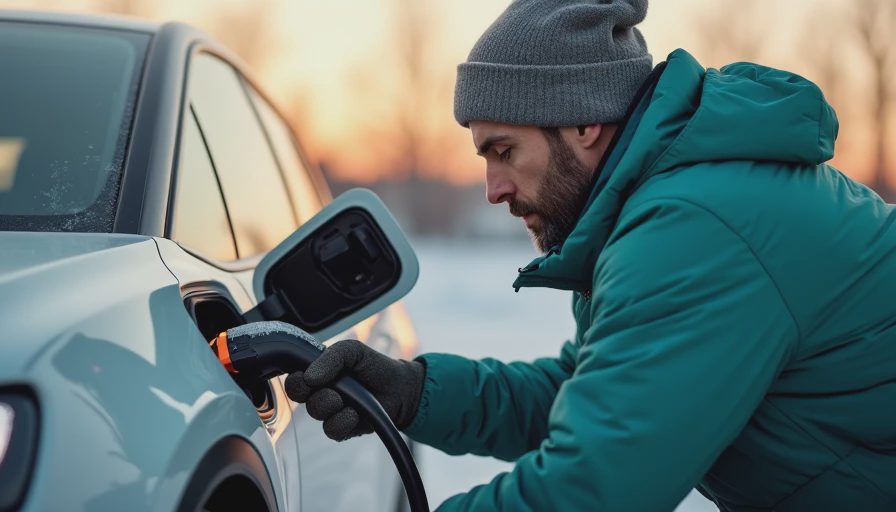
Charging an electric car in cold weather tips that actually help
The highest-value step is preconditioning. If the car offers battery preconditioning, enter the DC fast-charging station as the navigation destination. Many systems use that route information to warm the battery before arrival. Some models also provide a manual battery-conditioning command, while others begin conditioning only when the vehicle is plugged in or scheduled to depart.
Precondition while connected to shore power whenever possible. Set a departure time in the vehicle app or infotainment system, then allow the car to warm the cabin and battery from grid electricity rather than using stored energy. This preserves more range for the road. It also gives the pack a better starting temperature, which can reduce the slow initial portion of a fast-charge session.
Avoid arriving at a charger with both a nearly empty battery and a very cold pack. That combination creates the least convenient scenario: limited power when you need energy quickly. Leave a larger buffer, perhaps 15 to 25 percent instead of driving down to a single-digit state of charge in severe weather. The exact margin depends on the route and available chargers, but a buffer turns a software-controlled slowdown into a manageable delay.
Charging an electric car in cold weather tips should also include the simple physical checks. Clear snow and ice from the charge port before opening it. Inspect the connector for moisture, packed ice, or visible damage, and do not force a frozen latch. If the plug will not release, use the manufacturer’s release procedure rather than pulling the cable like a stuck lawn tool.
AC charging versus DC fast charging in winter
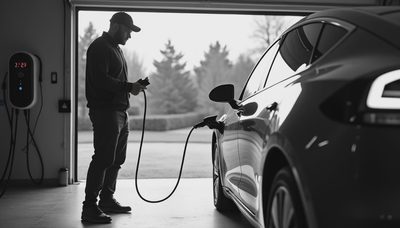
Home Level 2 charging is usually easier in cold weather because the car can remain connected for hours. Even if the vehicle initially draws power slowly, an overnight session provides time to reach the planned state of charge. A 7.2-kilowatt or 11-kilowatt home charger may be less dramatic than a 150-kilowatt public station, but duration is its advantage.
DC fast charging is more sensitive to battery temperature and state of charge. If you need a rapid stop, begin navigation to the charger early enough for preconditioning. Charge only as much as the trip requires when time is important. The final 10 to 20 percent often takes disproportionately longer because the system tapers power to protect the cells, and cold conditions can make that taper feel even more severe.
For a road trip, compare arrival estimates rather than charger labels alone. A 350-kilowatt station does not guarantee 350 kilowatts; the car, battery temperature, state of charge, charger availability, and station sharing rules determine the actual rate. Recording those values gives you useful evidence if a vehicle repeatedly underperforms under similar conditions.
A practical winter charging test
A useful test needs repeatable inputs. Record the outside temperature, battery percentage at arrival, battery percentage at departure, charger type, charger power, and whether preconditioning ran. Note the first five-minute power reading and the maximum observed rate. Also record whether the car was parked outside, driven immediately before charging, or left overnight in the cold.
Repeat the test on two or three comparable days. A single session is weak evidence because a busy station, restricted utility output, or a cold-soaked pack can distort the result. Compare the vehicle with itself under similar conditions rather than comparing an all-wheel-drive crossover with a small rear-wheel-drive sedan and calling the difference a defect.
Charging an electric car in cold weather tips become much more useful when paired with timestamps and software versions. If an OTA update changes battery conditioning behavior, document the version before and after the update. A clear log can reveal whether a problem is temperature-related, route-related, or a genuine regression hiding behind a polite “charging complete” notification.

Common mistakes that waste winter range
Running the cabin heater at maximum for the entire trip can consume considerably more energy than maintaining a moderate temperature. Use seat and steering-wheel heaters when available, because they warm occupants directly. Start climate control while plugged in, keep windows closed, and remove heavy snow from the bodywork before driving. Snow adds weight and aerodynamic resistance, while underinflated tires increase rolling resistance.
Do not assume every charging cable behaves the same outdoors. Use equipment rated for the conditions and follow the vehicle and charger instructions. Avoid extension cords unless the manufacturer specifically permits an approved product and setup. A household outlet can be useful for emergency charging, but it is slow, and an improvised cable arrangement creates unnecessary electrical and trip hazards.
Another common mistake is treating the range estimate as a fixed fuel gauge. Watch energy consumption and route elevation, not just the headline mileage. Strong wind, slush, steep grades, roof cargo, and sustained highway speed can consume more energy than the temperature alone. If the estimate drops quickly, reduce speed slightly and select a warmer, safer charging stop rather than gambling on the last few miles.
The winter workflow worth saving
Charging an electric car in cold weather tips can be reduced to a dependable sequence. The evening before a long trip, check the weather, route, and charger status. Set the desired departure time, plug in, and enable battery or cabin preconditioning. Before leaving, confirm the connector has released cleanly and that the planned first stop leaves a sensible reserve.
During the drive, use the built-in energy screen to watch consumption. Navigate to the fast charger early enough for conditioning to begin, and expect slower power during the first part of the session. If the rate remains unusually low after the battery warms, capture the data instead of guessing. Try another stall when practical, because the station can be the problem.
For charging an electric car in cold weather tips that survive real ownership, the final rule is simple: measure conditions, warm the battery deliberately, and preserve a buffer. Winter does not make an EV mysterious. It makes hidden variables visible, which is inconvenient but excellent material for a proper log file.

No letters yet — be the first guest to write.