The phrase toyota second us ev is useful search shorthand, but it is not an official model name. It can refer to Toyota’s second battery-electric vehicle sold in the United States, its second EV assembled domestically, or the next product after the bZ4X. Those are three different claims, and treating them as interchangeable is how a promising launch becomes an untraceable comment-thread rumor.
Toyota’s U.S. battery-electric story began with the bZ4X, introduced for the 2023 model year after production delays and a wheel-bolt recall slowed the opening chapter. Since then, the important question has not been whether Toyota intends to add EVs. It is which vehicle arrives next, where it is built, what software stack it uses, and whether the production car matches the early description.
For a technically minded buyer, the toyota second us ev search should therefore be treated as an evidence-tracking project. Start with dated announcements, then separate factory information, vehicle specifications, certification records, test drives, and owner logs. A rendered SUV is not a production specification. A press-release range estimate is not a repeatable highway result.
What “second U.S. EV” could mean
There are at least four reasonable interpretations. The first is Toyota’s second EV model sold through U.S. dealers. The second is the second Toyota battery-electric model assembled in a U.S. plant. The third is a second vehicle using Toyota’s newer dedicated EV platform or battery architecture. The fourth is a Lexus product being counted within the wider Toyota Motor Corporation portfolio.
Those distinctions matter because Toyota and Lexus share technology in some areas, while branding, factory location, pricing, and calibration can differ. An EV assembled in Kentucky is not automatically the second EV sold in America, and a Lexus battery vehicle is not automatically a Toyota-badged product. Search results often compress these details into one headline because headlines are not required to survive a software regression six months later.
The cleanest baseline is the bZ4X. Record its model year, drive layout, battery warranty, charging behavior, infotainment version, and recall history. Then compare every later claim against that baseline. If a source says the next vehicle is “larger,” define whether that means exterior length, passenger volume, cargo volume, or simply a more upright roof. If it says “faster charging,” look for a peak rate, charging curve, battery temperature, and ambient conditions.
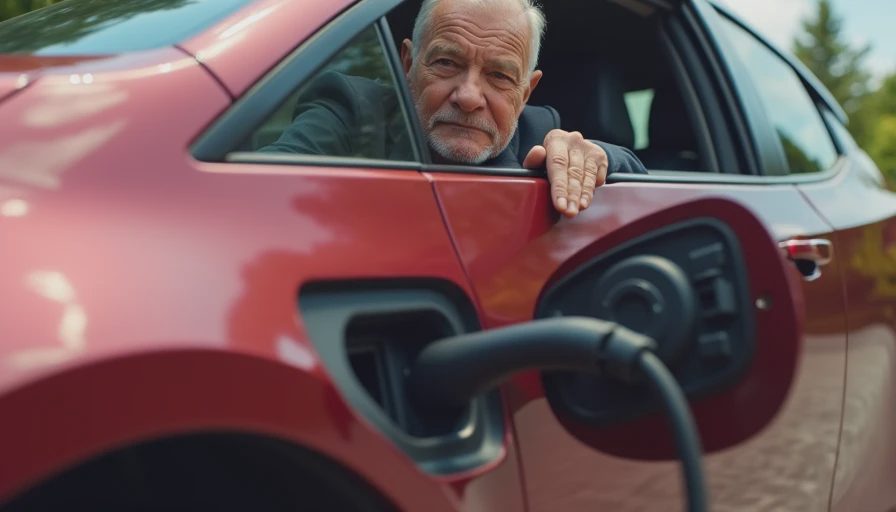
Factory claims need a paper trail
A serious toyota second us ev report should identify the plant, production timing, and source for each statement. Toyota has announced U.S. EV manufacturing and battery investments, including plans connected with its Kentucky vehicle plant and North Carolina battery operations. Announcements establish intent and investment; they do not prove that a particular trim has reached a dealership or that its battery pack is already in regular production.
The useful evidence arrives in layers. A company announcement can establish the intended vehicle class. Regulatory filings and certification documents can clarify power output, weight, range, and energy consumption. A window sticker can confirm equipment and pricing for a real vehicle. A dealer inventory record can show availability, but it should be checked against a vehicle identification number rather than a generic listing copied across a website.
For buyers, the practical sequence is simple. Save the original announcement as a PDF or screenshot. Write down its publication date and the exact wording. Record whether it says planned, expected, targeted, or in production. Later, attach a factory confirmation, certification document, or photographed vehicle label. This prevents a familiar failure mode: a 2023 promise being repeated in 2026 as though it were a current specification.
The cockpit is part of the vehicle
Powertrain evidence gets attention, but the cockpit determines whether an EV feels finished after the delivery ceremony. A second U.S. EV should be evaluated by processor, operating system, modem behavior, update mechanism, and version history rather than by screen size alone. A 12.3-inch display can still deliver a slow navigation search. A polished voice assistant can still fail when cellular coverage drops.
During a test drive, record the software version before changing settings. Pair one Android phone and one iPhone, test wireless projection, search for an address with a deliberate spelling mistake, and repeat the route after a restart. Note whether charging stations are filtered by connector and operating status, or merely displayed as decorative map pins. Test the vehicle with weak phone service if possible. The failure behavior is often more informative than the successful demonstration.
A useful log includes date, outside temperature, state of charge, route, driver-assistance setting, phone model, and exact reproduction steps. “Navigation froze” is a complaint. “At 42 percent charge, after entering a six-digit address while wireless CarPlay was active, the map stopped accepting touch input for 18 seconds” is evidence. The latter can be compared after an OTA update; the former mostly creates emotional weather.
Range and charging require repeatable tests
Range claims should be separated into EPA estimates, dashboard estimates, and observed trip consumption. They answer different questions. An EPA figure supports comparison between vehicles under a standardized procedure. The dashboard estimate reflects recent driving. A highway log shows what happened on one route with one temperature, speed profile, tire condition, and climate setting.
For the toyota second us ev, capture battery percentage at departure and arrival, miles driven, average speed, temperature, elevation changes, and charging stops. A 70-mile commute at 70 mph in cold weather is not comparable with a 70-mile suburban loop at 45 mph. Record charging from a known starting percentage to a known ending percentage, including the time spent connected after the rate has tapered. Peak kilowatts make attractive screenshots, but the curve tells you how long the stop actually takes.
Also check the connector standard and charging-network access. A vehicle can be compatible with a large public network while still requiring an adapter, account setup, or a later software update. Confirm what is included at delivery rather than assuming a future compatibility promise is already active.
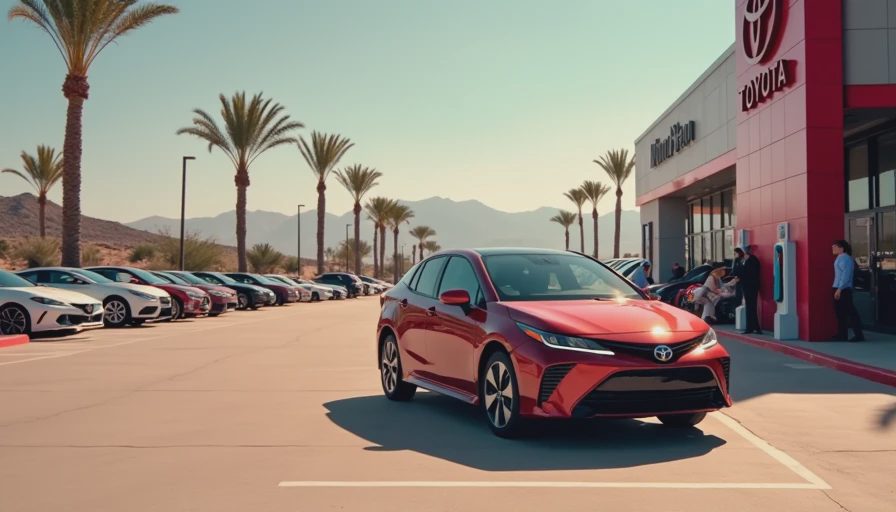
How to evaluate the next announcement
When the next Toyota EV announcement appears, apply a five-step review. First, identify whether the source is Toyota, a regulatory agency, a dealer, or an anonymous post. Second, label every specification as confirmed, estimated, or unverified. Third, compare the stated battery, motor, and charging details with the bZ4X baseline and any Lexus counterpart without assuming shared calibration.
Fourth, search for the vehicle identification label, certification data, and a real window sticker once production cars appear. Fifth, test the cockpit and charging workflow on more than one vehicle. A single pre-production drive cannot establish reliability, and one successful voice command cannot validate an assistant.
This process also protects against software-version confusion. Record whether the vehicle is running factory delivery software, a dealer-installed patch, or an OTA release. If an update claims to improve charging or driver assistance, measure the same route before and after it. Keep the old log. Memory is not a benchmark, particularly after an update that changes the interface and makes the failure harder to reproduce.
What buyers should demand before ordering
The toyota second us ev becomes a credible buying option when its identity is clear: official model name, production location, trim structure, battery warranty, charging hardware, software support policy, and a verifiable delivery vehicle. Ask the dealer for a VIN-specific build sheet and confirm whether advertised incentives apply to that exact trim. Ask how updates are delivered and whether the car can receive them without a service visit.
Do not treat an attractive lease payment as proof of strong technology. Calculate the total due at signing, monthly payments, mileage allowance, excess-mile charge, and disposition fee. Compare the result with an existing bZ4X lease, a Hyundai Ioniq 5, a Kia EV6, or a Tesla Model Y only after matching drive configuration and equipment. The cheapest monthly number can conceal a larger upfront payment or a shorter mileage limit.
The second U.S. EV should earn trust through traceable evidence, not by inheriting it from Toyota’s reputation. Save the announcement, inspect the production car, test the software, and publish the conditions behind every range or charging result. If the facts change, update the log instead of quietly rewriting history. That is the difference between a launch story and a useful ownership record.

No letters yet — be the first guest to write.