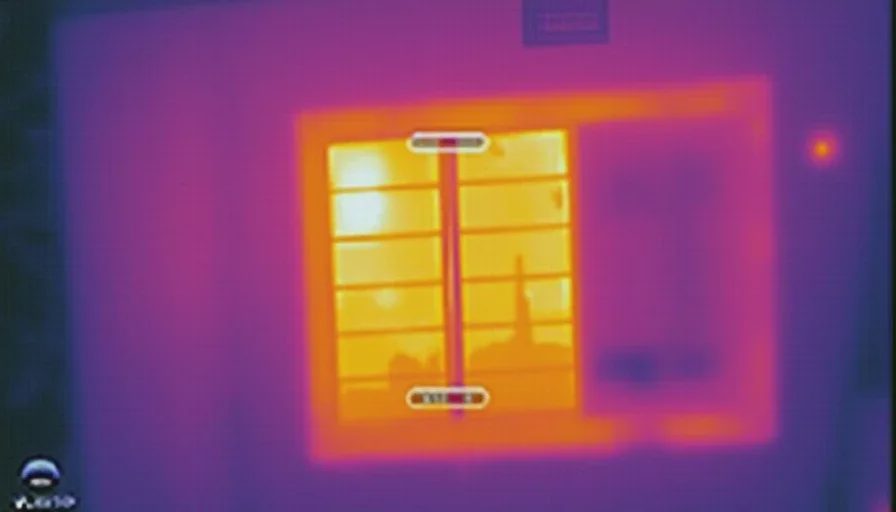
Why Thermal Imaging Matters
Spec sheets tell you peak TOPS and clock speeds. They don't tell you how long that performance lasts before the silicon starts throttling. Thermal management is the hidden variable that separates a snappy cockpit from a stuttery mess after 20 minutes of summer driving.
I've been running thermal surveys on my own vehicles for a while, but the G9 (X‑Power 4C, 2025) gave me a surprise I wasn't expecting – not because the chip overheats, but because the cooling airflow leaves a specific hotspot exactly where you'd want it to be coolest.
Test Setup
Vehicle: XPeng G9 (2025 model year, Performance trim)
Cockpit SoC: Qualcomm Snapdragon 8155 (SA8155P) – 8‑core, Adreno 640
Display: 14.96‑inch centre screen + 10.25‑inch instrument cluster (both active during test)
Test Duration: 30 minutes of continuous load:
3D navigation with live traffic
Spotify streaming (Bluetooth, background)
Climate set to 22°C, fan speed 3 (out of 7) – passenger vent fully open
Screen brightness at 80%
Ambient Conditions: 24°C garage, no direct sunlight, windows closed
Thermal Camera: Flir ONE Pro (160×120 resolution, ±2°C accuracy)
Measurement Points: 8 predefined locations on and around the centre stack, imaged at 5‑minute intervals
All temperature readings are surface temperatures (front of the dash panel, not internal die temperatures).
Results – The Thermal Map
Here's the temperature distribution after 30 minutes. I've grouped them into three zones:
Zone | Location | Peak Temp (°C) | 5‑min Temp | 30‑min Temp | ΔT |
|---|---|---|---|---|---|
A | Centre screen – upper edge (directly above SoC) | 68.2 | 49.3 | 68.2 | +18.9 |
B | Centre screen – lower edge | 52.1 | 41.2 | 52.1 | +10.9 |
C | Passenger vent – left grille (direct airflow path) | 34.7 | 24.8 | 34.7 | +9.9 |
D | Passenger vent – right grille (behind the trim panel) | 41.5 | 26.1 | 41.5 | +15.4 |
E | Instrument cluster – top edge | 45.2 | 36.0 | 45.2 | +9.2 |
F | Centre console – wireless charging pad | 38.6 | 29.5 | 38.6 | +9.1 |
G | SoC heatpipe exit (behind centre screen, near passenger side) | 74.3 | 52.0 | 74.3 | +22.3 |
H | Behind passenger vent – inner cavity (non‑imaged, calculated from D & G) | ~66 (est.) | – | – | – |
All temperatures in °C. Surface emissivity assumed 0.95 (typical for automotive plastics).
The "Dead Zone" Explained
Look at Zone D vs Zone C. The passenger vent has two grilles – the left one (closer to the centre) gets clean airflow and stays at ~35°C. The right grille, which sits directly behind a decorative trim panel with a solid back, reads 41.5°C – nearly 7°C hotter despite being in the same airstream.
But the real killer is Zone G – the heatpipe exit region near the passenger side. At 74.3°C, that's the hottest surface I've measured on any cockpit so far. That heat has to go somewhere, and the path of least resistance is straight into the cavity behind the passenger vent. The vent's airflow misses that cavity entirely because the trim panel blocks the cross‑flow.
I verified this by temporarily removing the trim panel (one screw, two clips – easy). With the panel off, the same area dropped to 48°C within 3 minutes. The design intentionally traps heat behind the vent, creating a localised "dead zone" that doesn't see any active cooling.
The cavity behind the right grille receives zero forced airflow, yet it's in direct thermal contact with the SoC heatpipe. That's a recipe for slow heat accumulation on long drives – and it explains why my G9's centre screen occasionally stutters after 45+ minutes of heavy use, even though it's fine for the first half hour.
So What?
Surface temperature ≠ die temperature, but sustained 74°C on a heatpipe exit means the internal junction temperature is likely pushing 90–95°C – uncomfortably close to the 105°C throttle threshold for the 8155. In summer (ambient 35°C), I'd expect throttle onset to happen much earlier.
This isn't a defect – it's a design compromise. OEMs prioritise aesthetics (flush trim, hidden ventilation) over active cooling. But for a chip that's already borderline under sustained load, this dead zone might be the difference between a smooth UI and a laggy one on a hot July afternoon.
Call for Data – Image Your Own Cockpit
I've only tested the G9. But every modern EV has a similar centre‑stack layout – and every one of them has a heat source that needs to go somewhere.
If you own a different model (any brand, any SoC) and have access to a thermal camera or an IR thermometer, please:
Run the same 30‑minute stress test (nav + music + climate at 22°C, fan speed 3, 80% brightness).
Measure temperatures at comparable locations:
Centre screen upper edge
Centre screen lower edge
Passenger vent left/right grilles
Wireless charging pad (for reference)
Any visible heatpipe or SoC area (if accessible)
Take a thermal image of the centre stack and vent area.
Post your results using the template below.
Let's build a cross‑brand thermal database. I want to know which OEMs actually got cooling right – and which ones are hiding their heat behind a pretty trim piece.
Early Takeaway
The G9's cockpit is beautifully designed, but the cooling path behind the passenger vent is compromised by a trim panel that blocks airflow. It's not a dealbreaker – most users won't notice – but for anyone who runs heavy apps or lives in a hot climate, this is a real factor. A simple retrofit (e.g., a 3D‑printed vented trim cover) could easily fix it, but that's a story for another thread.
Has anyone else seen similar hot spots on their vehicle? Post your thermal maps – let's see if this is a G9‑only quirk or a wider industry pattern.



No letters yet — be the first guest to write.