If you're weighing an EV against a traditional sedan, the electric car maintenance cost vs gas question is usually the deciding factor after the tax credits. We spend most of our time documenting OTA failures and infotainment bugs, but the maintenance question is a different kind of evidence problem. The numbers are clear once you separate the booster claims from the service records.
The EV Advantage Is Real, But Not Universal
The first thing every comparison notes is that an electric car has about a dozen moving parts in the drivetrain compared to hundreds in a gas engine. No oil to change, no spark plugs, no timing belts. A typical gas car calls for oil changes every 5,000 to 7,500 miles, and at $45 to $80 per service, that alone adds up to $180 to $240 a year for a daily commuter. On an EV, that line item is zero.
But zero oil changes doesn't mean zero cost. Electric cars still have suspension, a 12-volt battery, air conditioning, and a cabin filter. The high-voltage battery has its own cooling system with coolant that needs periodic flushing. Many automakers suggest a check around 50,000 to 100,000 miles, and a dealer flush runs $150 to $300. It's not a trivial bill.
Regenerative braking also shifts costs around. Because the motor does much of the stopping, brake pads on an EV can last 60,000 to 80,000 miles, compared to 30,000 to 50,000 on a gas car. But when an EV does need brakes, larger rotors and more labor push the price up.
Where EVs Quietly Cost More
The most understated line item is tires. The extra weight of the battery pack, combined with instant torque, wears them out faster. EV-specific tires use stiffer sidewalls and specialized compounds, so a set of four runs $600 to $1,000 installed versus $450 to $700 for a typical gas sedan.

You'll also see higher quotes for alignment and suspension. The heavier curb weight makes struts and bushings work harder, and premature wear on sway bar links shows up earlier. These aren't dramatic bills, but they arrive sooner than the cost tables suggest.
The cabin air filter on many EVs is a two-part unit that costs $50 to $120 to replace, while a gas car filter is often $20 to $40. And then there's the software. EVs now get over-the-air updates that can alter charging curves or thermal management. When that software glitches, a diagnostic visit can cost $100 to $200 before any part is ordered.
Where Gas Cars Add Up Year After Year
A gas car carries a longer service list. Oil changes, cabin and engine air filters, transmission fluid, and a coolant flush between 60,000 and 100,000 miles. For a mid-size sedan, those services total roughly $500 to $800 a year in the first five years.
The bigger expenses arrive later. A timing belt replacement on many four-cylinder engines runs $800 to $1,200. An ignition coil or fuel pump failure can push a visit past $400. Emissions components like oxygen sensors or catalytic converters produce repair bills from $300 to $2,500.
None of that is meant to dunk on gas cars. They're well-understood machines with cheap parts everywhere. The maintenance cost is just not optional.
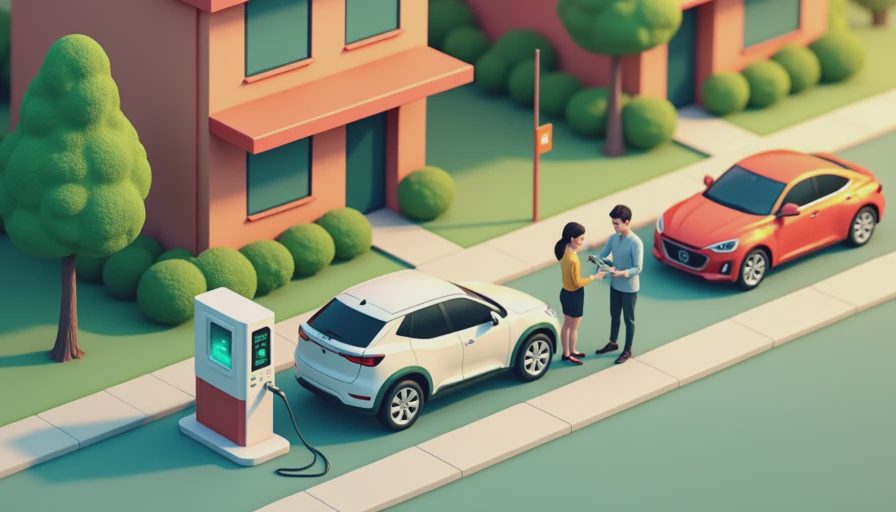
A 5-Year Cost Comparison in Real Dollars
Let's put real numbers side by side for a 12,000-mile-per-year driver. For the gas car, take a Honda Civic or Toyota Camry. Tires at 45,000 miles, oil changes every 7,500, brake pads at 40,000, and a few filters. Over five years, service costs land in the $3,000 to $4,500 range.
For a comparable EV, say a Chevrolet Bolt or Tesla Model 3, the biggest service items are tire rotation, cabin filters, and one brake fluid flush. Even with shorter tire life, the five-year total usually lands between $1,800 and $2,800. The EV still saves $1,000 to $2,000 over that period.
These figures ignore battery replacement, which almost never happens in the first eight years for modern packs. They also include a likely $150 to $250 charge for a new 12-volt battery around year three or four. But the direction is consistent: the electric car maintenance cost vs gas is lower in almost every large ownership data set we've seen.
What the Repair Shops Don't Tell You
Independent shops are still catching up on EV certification. A gas car can be serviced at any corner garage, but an EV often requires dealer equipment for battery diagnostics. That means fewer competing quotes and slightly higher labor rates. It also means you should build a relationship with a certified EV technician before the warranty ends, not after the first warning light appears.
The Bottom Line for Buyers
The practical takeaway for a used EV is to read the service history just like an accident history. Look for repeated battery cooling codes or suspension squeaks. If you're buying new, ask whether the maintenance plan includes roadside software assistance.
When you add up five years of ownership, an EV usually costs less to maintain, but the gap isn't the life-changing one some marketing suggests. Set aside $150 a month for maintenance and tires regardless of which side you choose. And don't compare MSRP alone. Pull the owner's manual service schedules, check tire sizes, and verify insurance rates, because those three items define the real total cost. The electric car maintenance cost vs gas question has a data answer, and now you have the numbers to argue with your neighbor about it.
No letters yet — be the first guest to write.