If you've been searching for a baby g wagon, you're not shopping from a Mercedes brochure. The name isn't official; it's shorthand for compact SUVs that borrow the G-Class's boxy, rugged silhouette without the six-figure price. In North America, the closest thing to a factory-made version is the Mercedes-Benz GLB. There's also the legendary Suzuki Jimny, a tiny off-roader that dominates overseas markets. Of those two, only one is easy to buy, register, and insure in the United States. This guide covers what the nickname means, which models wear it, and what auto insurance costs when you park one in your driveway.
What Is a Baby G Wagon Anyway?
There's no baby g wagon on any window sticker, but the term lives on in owner forums and dealer lots. The original steal-the-look candidate is the Suzuki Jimny, a compact four-wheel-drive SUV sold in Europe, Australia, and Asia. Park one next to a G-Wagen and the family resemblance is instant: flat panels, round headlights, and a stance that says "wait for me." The Jimny is a legitimate off-roader, but Suzuki stopped selling cars in the United States years ago, and gray-market imports come with registration headaches and parts support.
For American buyers, the model that wears the nickname is the GLB. It shares its platform with the A-Class and CLA, but it replaces their sedan swoop with a squared-off roofline and a proper vertical tailgate. The GLB 250 starts around $44,000, and the AMG GLB 35 with more power starts near $57,000. There's also the all-electric EQB, which keeps the same boxy shape and may qualify for federal EV tax credits depending on the model year.
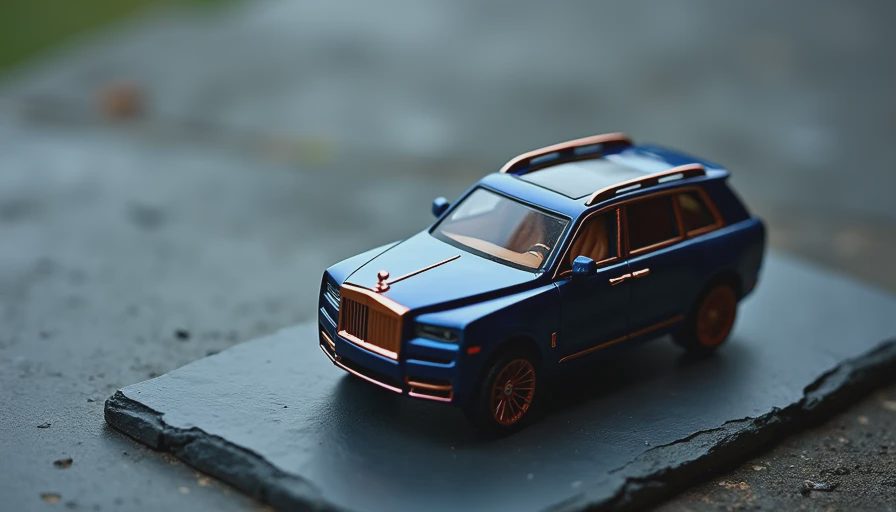
The look changes with trim. The GLB's optional Off-Road Engineering Package adds hill descent control and a drive mode for gravel and dirt. You still won't rock-crawl like a true G-Wagen, but you also won't need a ladder to reach the roof. That's why the nickname sticks: it's the practical interpretation of an icon.
Why the Baby G Wagon Look Works
The appeal is straightforward. A full-size G-Class starts near $150,000 plus fees. A compact stand-in, by contrast, gives you that upright presence for roughly a third of the price. The GLB also packs serious utility. It offers up to seven seats in a body just 182 inches long, and the boxy roof means adult passengers don't hit their heads in the second row. That's the kind of layout families and rental fleets love. The Jimny is smaller and more spartan, but it's easier to park in a cramped city and nearly unstoppable on muddy trails.
The catch: Mercedes styling comes with Mercedes maintenance costs. The GLB's turbocharged 2.0-liter four-cylinder is widely reported as smooth, but a luxury badge still pushes up repair bills and insurance premiums. If your budget lands closer to $30,000, a gently used GLB or another compact SUV with similar lines might serve you better.
How Much Does Insurance Cost for a Baby G Wagon?
Insurance companies don't just price the metal. They look at the VIN, the repair costs, the theft rate, and average claim severity. A vehicle in this segment lands in a different bracket than a Honda CR-V. Based on typical US pricing, full coverage for the GLB runs between $170 and $240 a month for a clean driving record, or roughly $2,000 to $2,900 a year. That's about 30 percent higher than the average compact SUV because of the Mercedes nameplate, pricier body panels, and costlier tech equipment.

If you're hunting gray market Jimnys, insurance is another story. Most standard carriers won't write a policy for a vehicle without a US VIN and federal certification. You'll end up with a specialty insurer like Hagerty or Grundy, and rates swing depending on how the truck was imported. For most people, the GLB is the model that can be insured through Geico, Progressive, State Farm, Allstate, or USAA without opening a specialty-broker file.
How to Save Money Insuring Your Baby G Wagon
No reason to overpay when the VIN is already in your wallet. Start by getting at least three quotes on the exact same coverage: 100/300/50 liability, collision, and comprehensive with a $1,000 deductible. That standard recipe balances out-of-pocket risk with monthly savings.
Raise the deductible from $500 to $1,000 and you can often cut the premium by 15 to 20 percent. Bundle your auto policy with home or renters coverage for a multi-policy discount. Telematics programs like Progressive Snapshot and State Farm Drive Safe & Save can lower rates if you're a cautious driver. Paying the six-month premium in full usually removes installment fees.
If you're leasing the GLB, your finance contract will require gap insurance and full comprehensive and collision coverage. Roll the gap into your insurer's quote instead of the dealer's business office. Get quotes with the VIN before you finalize the deal, not after, so there are no surprises at delivery.
Quick Checklist Before You Sign
A practical checklist makes the process smoother:
- Pull a vehicle history report for the exact VIN and check open recalls.
- Get insurance quotes using the VIN, not just the year, make, and model.
- Compare the GLB 250 with the EQB if you want an electric version and possible tax incentives.
- Look at used models from 2022 onward, since depreciation has already done some heavy lifting.
- Test the rear seats with your actual passengers before you commit.
The nickname may not be official, but the savings are real when you treat this compact luxury SUV like a normal underwriting decision. Don't fall in love with the boxy photo before you know what the policy costs.

No letters yet — be the first guest to write.