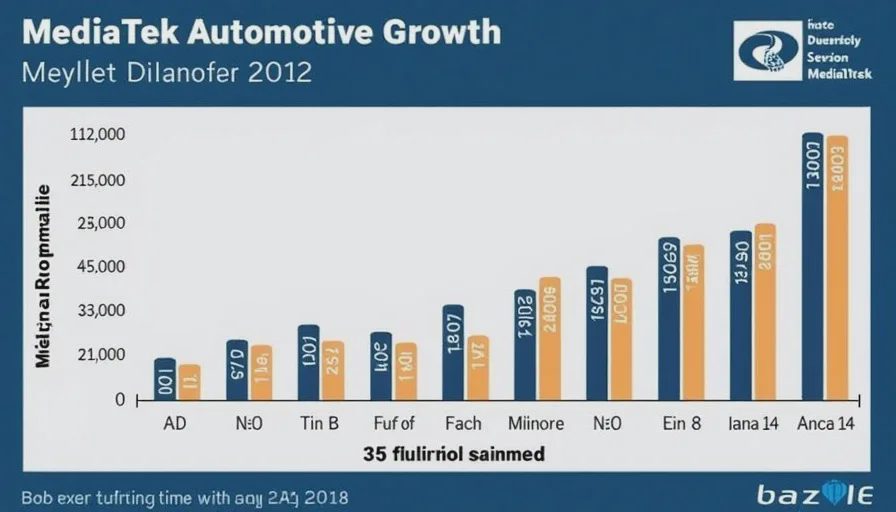
The Numbers – MediaTek Is No Longer a Niche Player
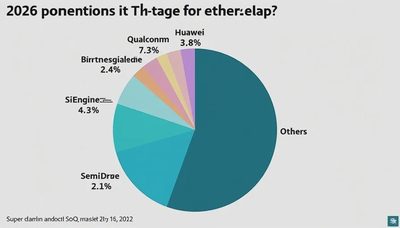
MediaTek's automotive business has grown over 385% in the past five years. In the Chinese smart cockpit SoC market, the company now ranks third overall, behind Qualcomm and Renesas, but ahead of NXP. More importantly, the growth trajectory is accelerating – December 2025 saw a sharp uptick in MediaTek's cockpit domain controller installations.
The Dimensity Auto platform now covers four solution pillars: Cockpit Platform, Connect Platform, Drive Platform, and Key Components. It is no longer a single‑chip play – it is a full‑stack automotive platform.
The Openness Thesis – Why Supply Chain Insiders Are Talking
The narrative gaining traction in supply chain circles is that MediaTek's automotive architecture is fundamentally more open than Qualcomm's. Here is what the signals suggest – and why I am asking for first‑hand verification.
1. The NVIDIA Partnership – CUDA as the Great Equaliser
The Dimensity Auto Cockpit C‑X1, co‑developed with NVIDIA, integrates an NVIDIA Blackwell GPU and deep learning accelerators. Crucially, it supports the NVIDIA CUDA ecosystem.
Why does this matter for openness? CUDA is the de facto standard for AI development. Developers already know it, already use it, and can bring their existing models to the C‑X1 without learning a proprietary toolchain. Qualcomm's ecosystem, by contrast, has historically required developers to work within its own AI stack – a higher barrier to entry.
One industry source put it bluntly: "Qualcomm gives you a black box. MediaTek gives you a toolkit."
2. NeuroPilot SDK + Flexible LLM Toolkit – Developer‑First
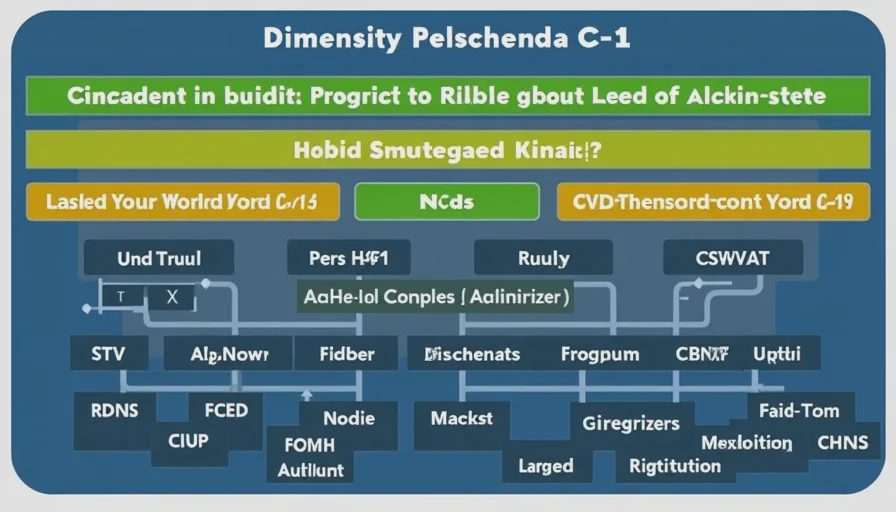
MediaTek's NeuroPilot SDK and Flexible LLM Toolkit are designed to accelerate AI model deployment on the vehicle's NPU. The company provides complete cockpit sensing data APIs, integrating visual, voice, and emotion data, and pre‑connecting the information needed for AI agents – helping OEMs develop AI applications quickly.
The Dimensity AI Development Kit 3.0 offers features like LVM model visual deployment (50% efficiency improvement), Low Bit compression tools (58% compression rate), and an AI Partner assistant that reduces on‑device model deployment time by 90%.
This is not a closed garden. It is an invitation to build.
3. Hardware‑Based Virtualisation and Unified Architecture
The C‑X1 platform is built with hardware‑based virtualisation and supports multi‑OS virtualisation technologies, meeting cockpit safety standards and diverse development requirements.
More importantly, it provides a unified architecture and a flexible, open ecosystem to support system development. This means OEMs and Tier‑1 suppliers can run multiple operating systems on the same silicon – Android Automotive, Linux, QNX, or custom RTOS – without being locked into a single vendor's software stack.
Qualcomm's approach has traditionally been more prescriptive. MediaTek's is deliberately agnostic.
4. Turnkey but Customisable – The OEM‑Friendly Model
MediaTek describes Dimensity Auto as "a turnkey solution of software and hardware with an open platform that's easy to integrate". The key word is "open." The platform is designed to be customisable – OEMs can tailor it to their specific needs without rebuilding the entire stack from scratch.
The partnership with DENSO takes this further. The two companies are co‑developing custom automotive SoCs for ADAS and cockpit systems, following ISO 26262 functional safety standards (ASIL‑B/D) and AEC‑Q100 reliability standards. This is not a one‑size‑fits‑all chip – it is a platform that can be adapted to specific OEM requirements.
Compare this to Qualcomm's model: you buy the chip, you get what you get. There is limited room for customisation at the silicon level.
5. A Four‑Tier Portfolio – From Premium to Entry
The Dimensity Auto Cockpit portfolio includes four new automotive SoCs: C‑X1 (premium), C‑Y1, C‑M1, and C‑V1 (entry). All come with NVIDIA DRIVE OS support.
This tiered approach means OEMs can use the same underlying architecture across their entire vehicle line‑up – from entry‑level to flagship – without retraining developers or rebuilding software stacks. It is a scalable openness that Qualcomm's more fragmented portfolio does not quite match.
The Supply Chain Signals – What We Know
Signal | Source | Implication |
|---|---|---|
C‑X1 has secured multiple luxury vehicle design wins from Chinese automakers | Industry sources | OEMs are betting on MediaTek's platform |
Geely will be the industry‑first to deploy C‑X1 in production vehicles | Geely / NVIDIA announcement | Production validation is imminent |
Foxconn (FOXTRON) has adopted C‑X1 for its high‑end models | MediaTek / Foxconn announcement | Global Tier‑1 validation |
MediaTek has 20+ global automotive partners | MediaTek MDDC 2026 | Ecosystem is real and growing |
Renesas MCUs now support the Dimensity Auto platform | Renesas / MediaTek | Cross‑vendor interoperability |
What I Am Asking – First‑Hand Contacts
Supply chain signals are suggestive, but they are not confirmation. I am posting this because I want to hear from people who have actual hands‑on experience with the Dimensity Auto platform.
If you work at:
An OEM that is evaluating or deploying MediaTek's cockpit chips
A Tier‑1 supplier integrating C‑X1 into a production vehicle
A software developer building on the NeuroPilot SDK
A supply chain analyst tracking MediaTek's automotive volume
Please share:
How open is the platform in practice? Can you actually customise the silicon‑level behaviour, or is it just marketing?
How does the development experience compare to Qualcomm? Is the toolchain genuinely easier to work with?
What is the real‑world performance? The C‑X1 specs are impressive on paper – do they hold up under thermal and workload stress?
What is the volume outlook? MediaTek is shipping millions of units, but how many of those are full cockpit domain controllers versus lower‑tier IVI systems?
I am not looking for NDA violations – just honest, on‑the‑record (or anonymous) assessments from people who have actually touched the silicon.
The Verdict – A Credible Challenger, But Questions Remain
MediaTek's automotive story is compelling. The numbers are real – 35 million units shipped, 385% growth, top‑three market position. The technology is credible – 3nm process, NVIDIA Blackwell GPU, CUDA support, 400 TOPS of AI compute. The partnerships are significant – Geely, Foxconn, DENSO, Unity China, Infineon.
But "more open than Snapdragon" is a claim that needs verification. Open architecture on paper does not always translate to open architecture in practice. The true test will be: can developers build on this platform without jumping through hoops? Can OEMs customise it without paying exorbitant licensing fees? Can the ecosystem grow organically, or is it controlled from the top?
That is why I am asking for first‑hand contacts. If you have worked with MediaTek's automotive platform – or if you are evaluating it against Qualcomm – your perspective is invaluable.

No letters yet — be the first guest to write.