The lucidtag release note tracker ota concept is useful because modern vehicle software rarely fails in a clean, documented way. An update arrives, the interface changes, and an owner is left asking whether a bug was fixed, hidden, or simply joined the growing collection of undocumented behavior. A searchable record turns that uncertainty into evidence.
For smart cockpit research, the valuable unit is not a vague statement such as “the latest update feels better.” It is a vehicle, a hardware configuration, an operating system version, an installation timestamp, and a repeatable test. That combination gives the next buyer something more useful than a comment thread full of thumbs-up icons.
What a release note tracker should record
A useful tracker begins with identity. Record the vehicle brand, model, model year, trim, regional software channel, cockpit chip if known, and the exact firmware or OS build. Do not shorten a version such as 3.2. Write the complete string shown in the vehicle settings or update screen. A minor suffix can distinguish a stability patch from a feature release.
Next, capture the delivery details. Include when the notification appeared, when downloading began, when installation finished, and whether the car was parked, charging, or connected to a particular network. OTA timing matters because two owners can receive what appears to be the same update on different schedules.
The lucidtag release note tracker ota workflow should also separate announced behavior from observed behavior. Put the manufacturer’s stated changes in one field, then document what happened in testing. If a release note says “improved voice interaction,” record wake time, recognition errors, microphone conditions, and the commands used. A label such as “better” is not a result; a 12-command test with three failures is a result.
A compact record might include:
- Vehicle and hardware identifiers
- Previous and current software builds
- Installation date, time, and battery state
- Release-note wording and source location
- Reproduction steps for the original issue
- Before-and-after result, including failures
- Screenshots, video, logs, or error codes

How to verify an OTA change without fooling yourself
Start with a baseline before installing anything. Test the feature three times under similar conditions and write down the outcome. For a voice assistant, use the same cabin temperature, seat position, phone connection, and command sequence. For lane-centering feedback, use the same road type only when it is safe and legal, and do not treat driver-assistance behavior as a substitute for attention.
After installation, wait for the system to complete indexing, app updates, and any reboot cycle. Some apparent improvements are temporary because a service has restarted; others appear only after a phone reconnects or a user profile synchronizes. Record those dependencies instead of calling the first successful attempt a fix.
The lucidtag release note tracker ota method works best with a controlled comparison. Change one variable at a time. If the Bluetooth problem disappears after both a firmware update and a new phone operating system, the result is inconclusive. If the same phone, vehicle profile, route, and command set produce different results after the vehicle update, confidence is stronger.
Use simple status terms: fixed, improved, unchanged, regressed, intermittent, or untested. “Fixed” should require repeated success, not relief after one quiet drive. “Regressed” should include the previous working build and the exact failure introduced by the new one. This vocabulary prevents a tracker from becoming a diary of impressions.
Reading release notes like an engineer
Release notes are often written for broad audiences, so their wording can be deliberately wide. “Enhanced system stability” might refer to a crash affecting a small module, a boot-time memory issue, or a backend service. It does not prove that a dashboard freeze, navigation reroute, or camera delay has changed.
The lucidtag release note tracker ota archive should preserve the original text, including punctuation and version labels. Store a capture date because online notes can be edited or removed. If the note is available only inside a vehicle app, save a screenshot and identify the menu path used to find it.
Translate broad claims into testable questions. “Improved navigation” becomes: Does route calculation complete faster? Does the map retain zoom level after restart? Does the car recalculate after a missed turn? “Enhanced connectivity” becomes: Does the phone reconnect after sleep? Does remote climate status refresh? Does the app display the current vehicle state without a manual refresh?
This does not require laboratory equipment. A phone stopwatch, screen recording, spreadsheet, and consistent route can expose meaningful differences. The goal is not to produce a marketing-grade benchmark. It is to preserve enough context that another owner can repeat the observation and disagree constructively.
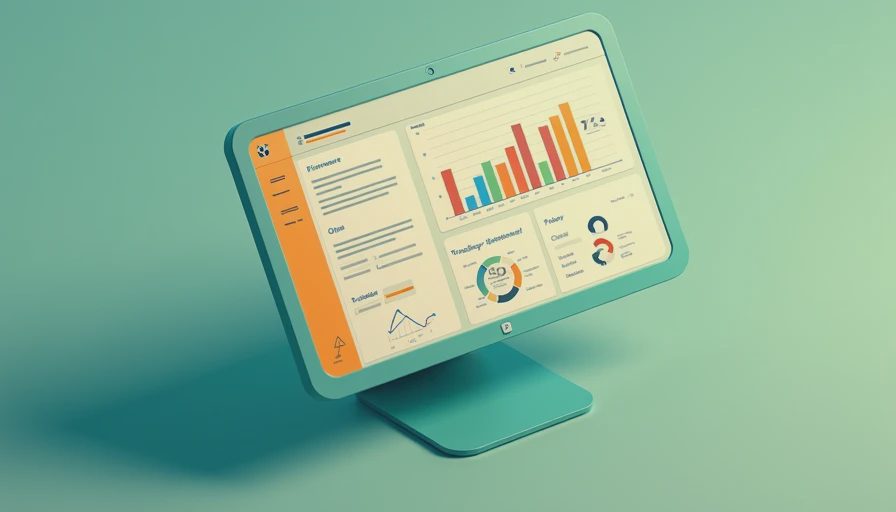
Turning the tracker into a buyer’s research tool
A used-car shopper should search by symptom, build, and hardware rather than by model name alone. A vehicle with a powerful cockpit chip can still have a poor camera pipeline, a slow cellular modem, or a buggy application layer. Conversely, a modest hardware configuration might perform well after several mature software releases.
The lucidtag release note tracker ota archive can show whether a complaint is isolated or persistent. Look for clusters: the same failure reported on one build, a partial improvement on the next, and a new regression after a later update. That sequence is more informative than a single five-star review written immediately after delivery.
Pay attention to scope. Some updates are optional feature packages, while others address core operating-system components. A release delivered to one region or trim may not match the package installed on another vehicle. Avoid transferring a result between configurations unless the hardware, software channel, and feature availability are comparable.
A practical buyer note might read: “Build A produced a black screen twice during cold boot. Build B reduced the issue during five starts but did not eliminate it. Build C was not tested.” That sentence is not exciting, but it is honest. It tells a shopper what is known, what is uncertain, and what question to ask during a test drive.
A repeatable reporting template
Every report should open with hardware and software, then move through conditions, steps, evidence, and outcome. For example:
- Identify the chip, vehicle trim, OS build, and application version.
- State the original symptom in one sentence.
- List the exact reproduction steps, including network and phone conditions.
- Run the same steps before and after the OTA installation.
- Record timing, successful attempts, failed attempts, and visible errors.
- Attach screenshots or clips with timestamps.
- Mark the result as fixed, improved, unchanged, regressed, intermittent, or untested.
- Add a follow-up date if the behavior could change after another reboot.
The lucidtag release note tracker ota format becomes genuinely valuable when negative results are retained. An update that does not fix a highly visible complaint is still evidence. So is a change that fixes one scenario while breaking another. Removing inconvenient entries creates a cleaner archive and a less truthful one.
For readers, the payoff is speed. Instead of scrolling through scattered owner posts, they can compare builds, hardware, dates, and reproduction steps. For contributors, the discipline is protective: a documented observation is harder to dismiss than a general complaint, and easier for another technically minded owner to verify.
Final assessment
OTA software is part of a vehicle’s ownership experience, not an invisible afterthought. A release note tracker gives that experience a memory. The lucidtag release note tracker ota approach is strongest when it records exact versions, separates official claims from observed results, and preserves failures alongside improvements.
That is the standard worth using before recommending a car, blaming a supplier, or declaring a bug solved. Capture the baseline, test one variable at a time, keep the evidence, and let the next driver make a decision from a log file rather than a mood.


No letters yet — be the first guest to write.