If you are asking how long does it take to charge, the honest answer is that the charger matters more than the badge on the grille. A 120V wall outlet, a 240V home setup, and a 350 kW DC fast charger live in different universes. The same car can take 12 hours overnight in one scenario and 25 minutes at a highway stop in another. I am keeping this in lab-notebook mode because the numbers are the point, not the marketing gloss.
how long does it take to charge at home?
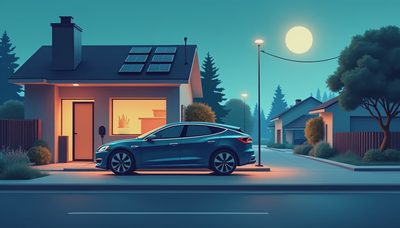
At home, the main split is between Level 1 and Level 2 charging. Level 1 uses a standard 120V outlet and usually adds about 3 to 5 miles of range per hour. That is fine for a short commute or a plug-in hybrid, but it is slow for a full battery EV. Level 2 uses 240V power and is the setup most owners want for daily use. Depending on the car and charger, you might see 10 to 44 miles of range per hour.
For a practical example, a 60 kWh battery that starts near empty may need about 9 to 10 hours on a 7.2 kW Level 2 charger after losses. A bigger pack, like the one in a Ford F-150 Lightning or a long-range Tesla Model Y, will stretch that into the overnight zone. If your schedule is simple, plug in after dinner and unplug in the morning. That is the cleanest answer to how long does it take to charge in a garage.
What actually changes the charging clock
Battery size is the obvious one, but it is only the first variable. State of charge matters because charging slows as the pack fills up. Going from 10% to 60% is often much faster than going from 80% to 100%. That is why road trippers usually stop at 80% unless the next charger is far away.
Charge rate also depends on the car’s onboard hardware. Some models can accept only 7.2 kW on AC, while others can take 11.5 kW or more. On DC fast charging, the vehicle decides the real speed. A Hyundai Ioniq 5 or Kia EV6 can pull very high power for part of the session, then taper. A Chevy Bolt charges more slowly on DC, but it can still be useful if the stop is long enough for coffee and a bathroom break.
Temperature is the quiet troublemaker. Cold batteries charge slower until they warm up, and very hot packs can also taper early. Many newer EVs use battery preconditioning, which is a software feature that warms the pack before a fast-charge stop. That is one of those OTA-adjacent details owners notice immediately when the timing gets better or worse.

Real-world charging times by setup
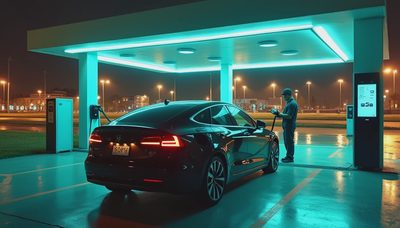
Here is the useful shorthand. On Level 1, think overnight plus some. On Level 2, think overnight for most drivers and sometimes a full workday for large packs. On DC fast charging, think lunch stop, but only if the car and charger are both cooperating. A 10% to 80% session can take about 20 to 45 minutes for many modern EVs, while some older or slower-charging models need longer.
The shape of the curve matters more than the headline peak. A charger advertising 350 kW sounds heroic, but your car may only use that number for a short stretch. After that, power tapers to protect the battery. This is why two people can leave the same station with different stories. One driver arrived at 12%, preconditioned the pack, and got a great session. Another rolled in at 78% in freezing weather and wondered why the charger suddenly behaved like a polite trickle hose.
If you are comparing cars, look for the maximum AC rate, the DC fast-charge curve, and the battery size. Those three numbers tell you more than the window sticker ever will.
A simple way to estimate before you plug in
You do not need a spreadsheet, but a rough formula helps. For home charging, divide battery capacity by charger power, then add a little time for losses. A 75 kWh battery on an 11 kW Level 2 charger will not refill in exactly 6.8 hours, because charging is not a perfect hose. Plan closer to 7.5 to 8.5 hours depending on how empty the pack is and how efficient the system runs.
For DC fast charging, estimate by the chunk you need, not by the whole battery. If you want to go from 20% to 80%, calculate the usable portion of the pack and then remember that the last 20% is slower. That is the trick behind most road-trip planning. In plain terms, how long does it take to charge is really a question of how much range you need for the next leg.
A good habit is to check three things before a trip: the charger type, the battery’s starting percentage, and whether the car can precondition automatically. If the route planner in the car is decent, trust it more than the station’s marketing sticker. Software updates sometimes improve this logic, and sometimes they move the buttons around just enough to annoy everyone.

When the answer gets longer than expected
A few things stretch charging time fast. Shared public chargers can cut power when another car is plugged into the same cabinet. Power can also be limited by the site itself, especially at older installations. In winter, a cold-soaked battery may spend part of the session warming up before it accepts full power. And if you are topping off from 85% to 100%, patience becomes part of the ritual.
This is why owners who track data tend to look at the whole chain, not just the charger screen. A 2024 software update that improves battery preconditioning can save real time on the road. A weak DC station can erase that gain in one bad stop. When people argue about charging speed online, they are often describing different hardware, different weather, and different software versions while pretending it is one simple number.
If you want to cut wasted minutes, leave with a lower state of charge, warm the pack before arriving, and choose the charger that matches the car’s capabilities. A good 250 kW site is worth more than a shiny sign that does not deliver.
Quick answers for shoppers
If you mostly drive in town, Level 2 at home is the sweet spot and usually makes the whole question boring in a good way. If you road trip often, DC fast charging matters more, and the real answer to how long does it take to charge depends on the battery curve between 10% and 80%. If you are comparing used EVs, ask about charging history, software version, and whether the car has active battery preconditioning. Those details turn guesswork into a number you can actually plan around.
The cleanest move is to match the car to the charger you will use most. Do that, and charging stops being a mystery and starts being a routine.
No letters yet — be the first guest to write.