The phrase 2026 toyota bz7 huawei motor specs autonomous driving combines four separate evidence problems: vehicle hardware, Huawei's software stack, Toyota's product configuration, and the word autonomous. At this stage, the useful approach is not to repeat launch-language as if it were a test result. It is to identify what has been disclosed, what remains market-dependent, and what a technically literate buyer should log before treating the bZ7 as a software-defined vehicle.
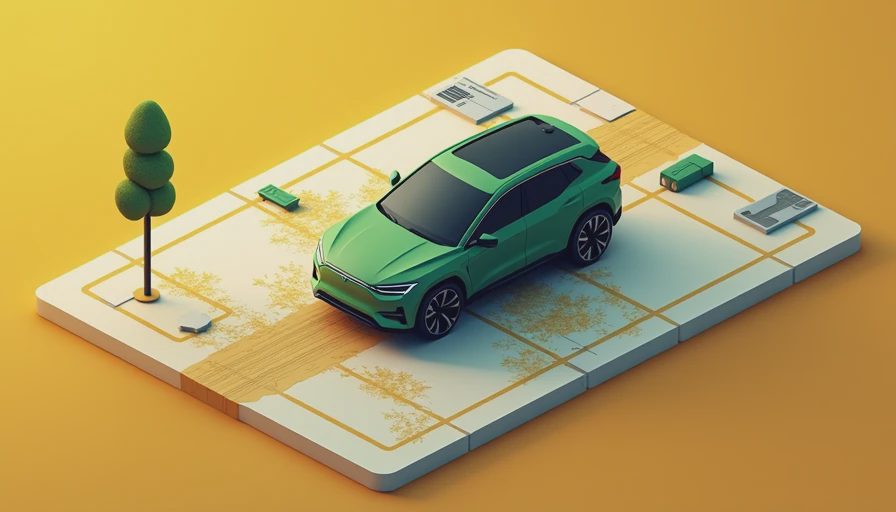
The Toyota bZ7 is positioned as a large battery-electric sedan for the Chinese market, developed through Toyota's local partnership structure. Public reporting has associated the vehicle with Huawei intelligent-driving technology and GAC Toyota production. That does not automatically prove a final sensor map, compute platform, motor output, or feature set for every trim. Model-year labels are especially slippery before retail deliveries begin; a 2026 listing can describe a planned vehicle rather than a fully documented production specification.
What is actually known about the bZ7 hardware
The most defensible starting point is architecture, not a glossy rendering. The bZ7 has been presented as a battery-electric sedan with a long body, a spacious cabin, and a technology-heavy cockpit. Reports have discussed a large battery and strong electric performance, but exact battery chemistry, usable capacity, charging curve, curb weight, and final range need confirmation from a homologation document or a production vehicle data plate.
The same caution applies to motor specifications. A single-motor rear-drive version and higher-output configurations are plausible subjects of discussion, yet an internet table is not a dyno sheet. The meaningful fields are peak motor power, continuous power, peak torque, inverter supplier, drive unit placement, reduction ratio, 0-to-60 or 0-to-100 testing method, and thermal behavior after repeated acceleration. Until Toyota or GAC Toyota publishes those fields for a specific trim, 2026 toyota bz7 huawei motor specs autonomous driving should be treated as a research query, not a confirmed specification block.
Battery size alone will not tell you how the car behaves. A heavy sedan with conservative software can feel less responsive than a lighter car with a smaller pack. Likewise, a large claimed range figure says little about winter highway consumption, sustained 120-kilometer-per-hour driving, or DC charging after the pack reaches operating temperature.
Huawei hardware and the meaning of assisted driving
Huawei's involvement is the most interesting part of the 2026 toyota bz7 huawei motor specs autonomous driving question, but “Huawei technology” can describe different layers. It might refer to an intelligent-driving solution, cockpit electronics, sensing hardware, software integration, or a broader supplier relationship. Those layers should not be collapsed into one claim that the vehicle drives itself.
A proper equipment sheet should identify the number and type of cameras, radar units, ultrasonic sensors, and any lidar hardware. It should also name the compute platform, operating system or software generation, supported map coverage, and whether the system uses high-definition maps or navigation-assisted perception. Without those details, buyers cannot compare the bZ7 meaningfully with systems from Tesla, XPeng, NIO, Mercedes-Benz, or other manufacturers.
Autonomous driving is also the wrong shortcut for a system that still requires an attentive human. Highway lane centering, adaptive cruise control, automated lane changes, urban navigation assistance, and automated parking each have different operating limits. A driver must remain responsible, watch the road, and be ready to intervene. Marketing language can be ambitious; the owner manual is the document that defines the boundaries.
A practical motor-spec verification method
When official specifications arrive, capture the document version and market before saving numbers. Start with the vehicle identification, trim name, battery supplier, battery capacity, drive configuration, and rated range test cycle. Then record motor power, torque, charging limits, and vehicle mass. A screenshot without a date is weak evidence because trim names and software packages can change during a model year.
For performance, separate manufacturer claims from repeatable testing. Record battery state of charge, outside temperature, tire pressure, road grade, launch mode, and whether the result uses a rollout. If a review says the bZ7 feels quick, that is a useful driving impression but not a motor benchmark. Three consistent runs are more informative than the fastest isolated number, particularly for a vehicle whose thermal controls may reduce output after repeated launches.
The same log should capture software version and sensor warnings. If a driver reports a lane-centering failure, “it stopped working” is not enough. The useful entry includes road type, weather, markings, speed, traffic density, assist mode, dashboard message, and whether a restart changed the result. Grief without a firmware version is only a comment thread wearing a lab coat.

What to test in the autonomous-driving system
For anyone evaluating 2026 toyota bz7 huawei motor specs autonomous driving, begin on a divided road with clear markings and light traffic. Confirm that adaptive cruise maintains a stable gap without repeated braking. Observe whether lane centering holds a consistent position through gentle curves or drifts toward a line. Note the time between selecting an assist feature and receiving a clear status indication.
Next, test ordinary edge cases rather than staged hero moments. Watch how the system handles a cut-in, a disappearing lane line, a construction-zone shift, a stopped vehicle near the shoulder, and a motorcycle passing on either side. Do not deliberately create danger. The purpose is to document disengagements and warnings during normal driving, not to see whether software can be bullied into a crash.
Automated lane changes deserve separate treatment. Record whether the system requests confirmation, checks adjacent traffic, cancels when a vehicle accelerates into the gap, and explains why a maneuver was refused. A smooth demonstration in an empty road video cannot establish reliability in dense traffic. Sensor cleanliness, sunlight, rain, road markings, and map availability can all alter behavior.
OTA credibility matters more than launch slides
A modern bZ7 will be judged after delivery, when updates begin changing the vehicle. Buyers should save release notes, installation dates, firmware identifiers, and before-and-after behavior. If an OTA update claims improved lane recognition, test the same route under similar conditions before declaring success. If the voice assistant changes but the release note only says “experience optimization,” record the actual change rather than filling the gap with optimism.
The 2026 toyota bz7 huawei motor specs autonomous driving search should therefore include an update history, not just a launch article. Look for rollback behavior, update failure messages, modem connectivity, parked installation requirements, and whether a driver can see which feature changed. A serious software program makes regressions traceable. A vague update process turns every fault into an argument about memory.
The current buyer’s decision rule
The 2026 toyota bz7 huawei motor specs autonomous driving package could become compelling if the production car combines efficient electric hardware with clearly bounded driver assistance and transparent updates. It should not be bought on a headline number for range, motor output, or “autonomy” alone. Confirm the exact trim, market, sensor suite, battery, charging performance, and legal operating limits first.
For now, the responsible verdict is provisional. Track official Toyota and GAC Toyota documents, independent instrumented tests, owner logs, and software versions. When those records agree, the bZ7 will have an evidence-backed specification. Until then, the most honest description is a promising electric sedan with an important Huawei software question still waiting for production-grade answers.
No letters yet — be the first guest to write.