When drivers ask what is regenerative braking, the short answer is that the electric motor turns into a generator when the car slows down. Instead of wasting all that motion as heat at the brake pads, the system sends part of it back into the battery. That changes the way an EV or hybrid feels in traffic, on hills, and during long descents. It also changes the service picture: less heat, less pad wear, and a lot more dependence on software calibration. If you have ever lifted off the accelerator in a Tesla, Hyundai Ioniq 5, Chevy Bolt, Nissan Leaf, or Toyota Prius and felt the car tug back, you have already met the feature in the wild.
What is regenerative braking in a real car
The basic hardware is not complicated. The traction motor spins the wheels, and during deceleration the same motor works in reverse as a generator. The inverter routes that power back toward the battery, and the control software decides how much deceleration to create. The friction brakes are still part of the system, because regen alone cannot always deliver a full stop. That is why many EVs blend both systems together without making the driver think about the handoff.
The limits show up fast once conditions change. At low speeds, there is less motion available to harvest, so regen fades as the car crawls to a stop. If the battery is nearly full or very cold, it may not accept much charge, and the car will lean harder on the brake pads. The same thing can happen when wheel slip is detected. The result is practical, not magical: useful energy recovery, quieter braking, and a lot less heat.
Where the payoff shows up first
In stop-and-go traffic, regen earns its keep. Every red light becomes a chance to recover a little energy instead of throwing it away. On a downhill commute, it can also hold speed without riding the brake pedal. That does not mean a car gets some miracle range boost. The real gain is usually modest, but it is real, and it adds up over months of commuting. The biggest practical win is brake life. A driver who spends most of the week in city traffic may see pad replacement pushed out by tens of thousands of miles compared with a similar gas car, especially if the car blends regen smoothly and the driver is not hard on the pedal.
One-pedal driving is a different feel
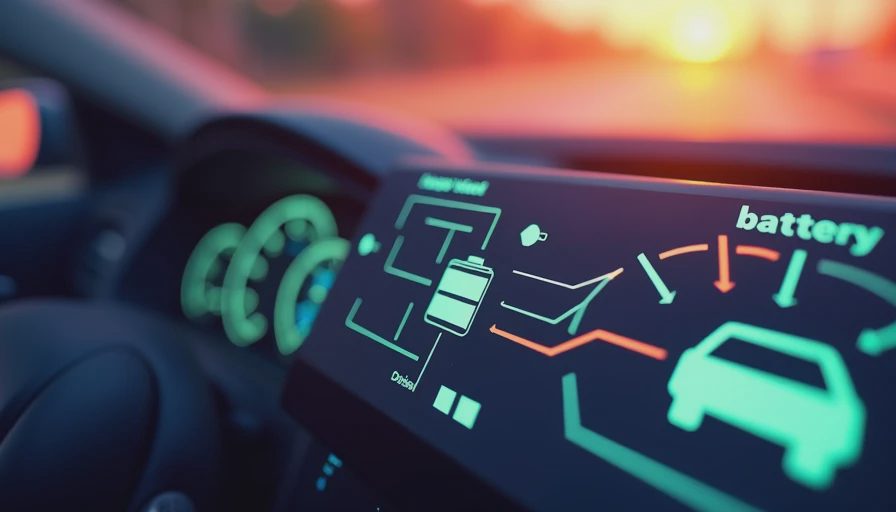
One-pedal driving is basically a strong regen setting that can slow the car enough to stop without touching the brake pedal in normal use. Some drivers love it because the left foot gets a vacation and the car feels tidy in traffic. Others need a few drives before the lift-off deceleration feels natural. The important detail is that one-pedal mode is still not a replacement for the brake system. Hydraulic brakes, ABS, and stability control are still there for hard stops, slippery pavement, and emergency maneuvers. On a wet road or loose surface, some vehicles reduce regen automatically so the rear wheels do not get weird. That behavior is not a bug; it is the car avoiding a physics lesson.
What changes regen strength
Regen is not fixed. Battery temperature, battery charge level, road speed, tire grip, and drive mode all change how much slowing the car can create. Some EVs also let the driver pick a stronger or lighter setting, sometimes through paddles, a touchscreen menu, or a drive mode button. Software matters too. A firmware update can change pedal mapping or the way the car blends regen with friction braking, which is why owners notice that the same model can feel different after an OTA update. If you are documenting behavior for a used-car purchase, note the ambient temperature, state of charge, drive mode, and software version before you compare impressions. Cars are generous that way: they will reproduce the problem if you ask politely and write down the variables.

What it means for maintenance and repairs
The headline maintenance benefit is slower brake wear. Less friction means less pad dust, less rotor heating, and often longer intervals between brake jobs. That said, regen does not eliminate maintenance. Brake fluid still ages. Caliper slides can still corrode. Rotors on lightly used cars can still rust on the surface if the friction brakes do not get exercised often enough. On a used EV or hybrid, a quick inspection of pad thickness, rotor condition, and brake fluid age is worth more than a glossy sales pitch. If the seller says the brakes look new after 40,000 miles, that can be normal on a car with strong regeneration, not automatically a red flag.
How to test it before you buy
The best way to judge the system is to drive in the conditions where you will actually use it. Start on a road with a few stoplights and a mild downhill. Lift off the accelerator and pay attention to how quickly the car slows, whether the transition feels smooth, and whether the brake pedal comes in cleanly when you need more stopping force. Then try a parking lot or quiet neighborhood street to see whether the deceleration matches your comfort level at low speed. If the vehicle offers adjustable regen, try both ends of the range. A strong setting is great for commuters; a softer setting can be easier for drivers who want more coasting. And if you are comparing EVs for ownership costs, ask about brake service intervals, battery preconditioning, and repair parts availability, because the car you buy has to live in the real world, not the brochure.
Now that you know what is regenerative braking, the question is whether the calibration fits your route and your right foot. On the right car, it saves pads, reduces heat, and makes traffic less annoying. On the wrong one, it feels like the vehicle is editing your inputs for you, which is less charming than the ads suggest. Test it on the roads you use most, then decide with actual data instead of showroom optimism.


No letters yet — be the first guest to write.