The pros and cons of electric cars are easier to evaluate when you treat the vehicle as a system, not just a battery with four wheels. Purchase price, home charging, software behavior, winter range, repair access, and insurance all matter. An electric car can be impressively quiet and mechanically simple while still delivering a frustrating navigation update or an inconvenient charging stop. The useful question is not whether electric vehicles are universally good or bad. It is whether their operating pattern matches your routes, climate, parking setup, and tolerance for unfinished software.
The strongest advantages in daily use
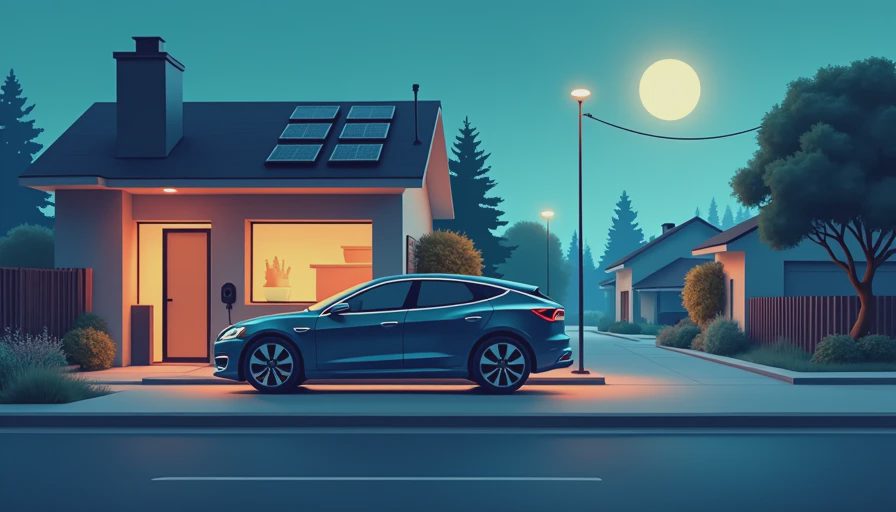
The most obvious benefit is energy cost. A driver charging at home can often spend less per mile than a driver buying gasoline, especially when the vehicle is used for a long commute. The exact result depends on electricity and fuel prices, vehicle efficiency, and charging habits, but home charging turns most mornings into a full-tank departure without a gas-station detour. Public fast charging is usually more expensive, so the savings are strongest when a garage, driveway, or workplace outlet is available.
Electric motors also deliver immediate torque. A compact model such as a Chevrolet Bolt EV or Hyundai Kona Electric can feel responsive in city traffic without shifting gears. Regenerative braking reduces use of the friction brakes, and the cabin is notably quieter at low speeds. Routine maintenance is generally simpler because there is no engine oil, spark plugs, exhaust system, or traditional transmission. That does not make maintenance free: tires, suspension parts, coolant systems, cabin filters, and battery thermal management still require attention.
The driving experience creates another advantage. One-pedal driving can make stop-and-go traffic less tiring, while scheduled charging and preconditioning let an owner warm or cool the cabin before departure. Models from Tesla, Ford, Kia, Rivian, and others also demonstrate how a vehicle can improve through software. When updates are tested properly, a patch can add a useful feature or correct a repeatable bug without a dealership visit. When testing is weak, the same mechanism can move a familiar control, break a voice command, or create a new warning that requires a log file and patience.
The limitations that show up after the test drive
Range is not a single permanent number. Highway speed, cold weather, steep terrain, cargo, tire pressure, and cabin heating all affect consumption. A vehicle advertised near 250 miles of range can provide a very different planning experience during a freezing interstate trip. Fast charging also slows as the battery approaches a high state of charge, so a road trip is built around charging windows rather than simply stopping until the tank is full.
The pros and cons of electric cars become especially visible for apartment residents and curbside parkers. Without reliable overnight access, an owner may depend on public stations, workplace charging, or a nearby DC fast charger. A home charger installation can cost several hundred dollars for a straightforward setup and more when the electrical panel, trenching, or detached garage complicates the work. Charging networks are improving, but connector compatibility, payment apps, broken stalls, and queueing remain practical variables.
Purchase price is another important line item. Federal, state, utility, and manufacturer incentives can change the calculation, but eligibility rules and vehicle limits require careful checking. Used EVs can offer strong value, yet battery health, remaining warranty coverage, prior accident repairs, and software support deserve the same scrutiny as mileage. A low odometer reading does not automatically prove a healthy battery. Ask for service records, inspect charging behavior, and confirm that the car receives the updates it is supposed to receive.
Battery, repair, and ownership risk
Battery packs are expensive components, although a complete replacement is not the normal outcome of routine ownership. Modern packs use monitoring systems, thermal controls, and warranty coverage that can protect owners from certain defects. The risk is more complicated after a collision. Damage to a pack or its enclosure can make a repair more expensive than the exterior damage suggests, and some shops may not have the equipment or training to diagnose high-voltage systems.
That is where insurance enters the calculation. Collision coverage can help pay for damage from a crash, subject to the deductible and policy terms. Comprehensive coverage generally addresses non-collision events such as theft, hail, falling objects, or animal impact. Liability coverage pays for injuries or property damage a driver causes to others; it does not repair the driver’s own vehicle. An EV’s insurance premium can be influenced by repair costs, parts availability, performance, location, driving history, and claim frequency. Get quotes for the exact year, trim, and battery configuration before buying.
Some insurers offer telematics programs that price part of the policy around recorded driving behavior. That can reward smooth, low-risk driving, but review what data is collected and how it affects renewal pricing. Compare the same liability limits, collision and comprehensive deductibles, rental reimbursement, and roadside assistance across carriers such as State Farm, Progressive, GEICO, or regional providers. A cheaper quote with weaker limits is not a real comparison.

Software is part of the vehicle
For a technically minded buyer, the dashboard is another maintenance surface. Record the vehicle’s operating system version, driver-assistance package, charging firmware, and navigation data during an inspection. Reproduce important functions before purchase: Bluetooth pairing, route planning, phone projection, voice commands, camera views, climate controls, and charging-session history. A sales demonstration is not a benchmark. Test the actual workflow you use every week.
Over-the-air updates can improve a car, but they can also change menus and behavior. Read release notes when available, save screenshots before a major update, and note whether a fault occurs once or under repeatable conditions. A useful report includes the timestamp, battery state, outside temperature, software version, road type, and exact reproduction steps. “The car is weird” is a complaint; “lane guidance disengaged twice after 18 minutes with version 4.2.1” is evidence.
This software layer can affect resale value as well. Buyers want confidence that maps, charging controls, safety systems, and connected services will continue working. A discontinued app or unsupported modem may not appear on a spec sheet, yet it can make an otherwise capable used vehicle irritating to own.
A practical decision procedure
Start with seven days of real driving data. Record daily miles, parking location, highway percentage, average temperature, and the number of times you could charge at home or work. Compare that profile with the vehicle’s usable range rather than its optimistic headline figure. Then price electricity, public charging, insurance, tires, registration, financing, and expected maintenance. Include a home charger estimate instead of treating installation as free.
Next, drive the route you actually care about. Test visibility, seat comfort, adaptive cruise behavior, regenerative braking, charging navigation, and cabin noise. Ask how the car behaves when the battery is low and whether the nearest service center can handle high-voltage repairs. For a used model, obtain a battery-health report and verify open recalls, warranty transfer rules, and accident history.
The pros and cons of electric cars usually resolve into a simple operating question: can you charge conveniently, and does the vehicle’s software deserve your trust? If the answer is yes, lower routine complexity and quiet, responsive driving can outweigh the purchase and planning compromises. If the answer is no, a hybrid or efficient gasoline vehicle may fit better without requiring a heroic charging spreadsheet.
Before signing, obtain multiple insurance quotes using identical coverage limits and deductibles. Confirm roadside assistance, rental-car coverage, glass treatment, and any restrictions related to battery damage. The best choice is not the car with the longest specification sheet. It is the car whose energy, repair, insurance, and software systems remain predictable after the novelty wears off.
No letters yet — be the first guest to write.