The ev charger installation cost is usually less mysterious than the quote sitting in your inbox. For a typical single-family home, installing a Level 2 charger often lands between $800 and $2,500, including equipment and electrical labor. A short run from the panel can cost less, while a detached garage, trenching, or a service-panel replacement can push the project beyond $5,000. The right number depends less on the electric vehicle and more on the house's wiring, distance, and available capacity.
A charger is not just a wall-mounted appliance. It is a continuous electrical load, which means the circuit, breaker, conductors, disconnects, and panel must be sized correctly. That is where casual estimates fail. A technically neat installation also produces documentation that can help with future maintenance, home resale, and questions from an insurer.
What the charger itself costs
Level 1 charging uses a standard 120-volt outlet and is often included with an EV. It adds roughly three to five miles of range per hour, depending on the vehicle and conditions. If an existing outlet is safe, grounded, and conveniently located, the hardware cost can be close to zero. An electrician might still charge $150 to $400 to inspect or replace the receptacle.
Level 2 equipment uses 240 volts and typically adds about 20 to 40 miles of range per hour. Home units from ChargePoint, Emporia, Wallbox, Tesla, and Autel commonly sell for approximately $400 to $900 before installation. Smart models can schedule charging, track energy use, and respond to utility time-of-use rates. Those features are useful, but they do not remove the need for a properly sized circuit.
The ev charger installation cost for a basic Level 2 setup is often $600 to $1,500 in labor and materials. That estimate assumes the main panel has room, the charger is near the panel, and the wiring can run through an accessible basement, crawl space, or unfinished garage wall. A hardwired unit usually offers a cleaner result than a plug-in setup, although a NEMA 14-50 receptacle can be practical for some owners who want a removable charger.
Why electrical distance changes the quote
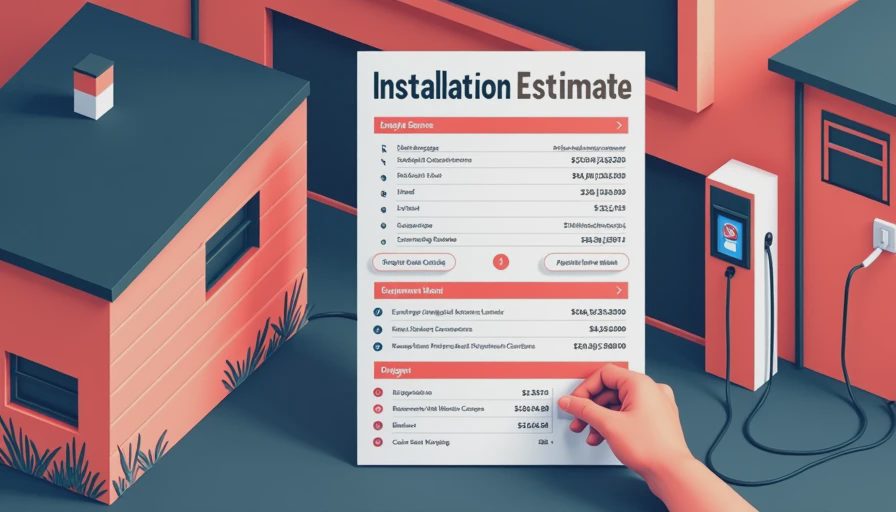
The shortest path from the panel to the parking space is usually the cheapest path. A charger installed on the opposite side of an attached garage may require extra cable, conduit, wall access, and labor. Exterior runs need weather-rated equipment and careful fastening. A detached garage can require underground conduit, trenching, concrete work, and a subpanel. In that situation, the ev charger installation cost can reach $2,500 to $6,000 without anything being wrong with the charger itself.
The panel is the next major variable. Many newer homes have a 200-amp service with spare capacity. Older homes may have a 100-amp panel, crowded breaker spaces, outdated wiring, or a service that already supports electric heat, a hot tub, and an electric range. Adding a 40- or 60-amp EV circuit may require a load calculation rather than a guess based on empty breaker slots.
A service upgrade can add $2,000 to $5,000 or more, especially when the utility must replace a meter, service drop, or outdoor equipment. In some homes, an electrician can avoid that expense with an energy-management device that limits charger output when other large loads are running. That solution is not universal, but it is worth pricing before approving a full upgrade.
Permits, inspections, and quote quality
Permit requirements vary by city and county, but many jurisdictions require an electrical permit for a new 240-volt circuit. Permit fees may range from about $50 to $300, followed by an inspection. The permit is not decorative paperwork. It creates a record that the work was reviewed and gives the installer a clear requirement to follow.
Ask each electrician for the same scope: charger model, circuit amperage, wire type and length, conduit route, breaker brand, disconnect requirements, permit handling, inspection, and removal of old equipment. Also ask whether the quote includes drywall repair, trench backfill, patching, and commissioning. A $900 quote that excludes a $700 trench is not a bargain; it is an incomplete measurement.
Before work starts, verify the electrician's license and request proof of general liability insurance. A professional should be willing to explain the load calculation and show where the equipment grounding path runs. Be cautious when a quote promises a 60-amp circuit without asking about the vehicle, charger settings, panel rating, or service capacity. More amperage is not automatically better engineering.
How EV charging affects home insurance
Most standard homeowners policies cover a permanently installed charger as part of the dwelling or other insured property, while a portable cable may be treated as personal property. Coverage depends on the policy language, the cause of loss, and the equipment's location. Damage caused by improper installation, wear, or an excluded electrical event can create a coverage dispute.
The ev charger installation cost should therefore include documentation, not just copper and labor. Keep the permit, inspection approval, invoice, charger serial number, installation photos, and any load calculation. Save the electrician's certificate of insurance as well. If the charger is mounted outside, confirm that the enclosure is rated for outdoor use and that the installation protects it from impact, water intrusion, and vehicle movement.
A charger itself typically does not create a dramatic homeowners premium change, but an unpermitted modification can complicate a claim or inspection. If you are buying a home with an existing EV charger, ask when it was installed and whether the panel work was inspected. This is the electrical equivalent of checking firmware version history before buying a used car: the hardware may look fine while the evidence is missing.
Incentives and ways to control the budget
Federal, state, utility, and local incentives can reduce the net price, but eligibility and deadlines change. Some programs apply only to qualifying equipment, approved contractors, specific locations, or off-peak charging enrollment. Search your utility's rebate page and the Department of Energy's current incentive information before treating a rebate as guaranteed savings. A tax credit is also different from an instant discount: one reduces a tax liability later rather than reducing the electrician's invoice today.
You can reduce the ev charger installation cost by placing the unit close to the electrical panel, choosing a standard cable route, and avoiding unnecessary trenching. Get at least three itemized quotes, but compare the electrical design rather than selecting the lowest total. A $1,200 installation with proper conduit and an inspection can be cheaper over time than a $700 job that leaves exposed cable, an overloaded panel, or a receptacle that overheats.
A practical decision before scheduling work
Start with the vehicle's usable battery size and your daily mileage. If the car travels 35 miles per day and sits overnight for 10 hours, Level 1 charging may cover the routine. If you regularly return home nearly empty, share one charger between vehicles, or need a fast overnight refill, Level 2 is the more sensible investment.
Then photograph the main panel, meter, parking location, and proposed cable route. Note the panel's amperage, spare breaker spaces, and existing large appliances. Send those details to electricians before the site visit so they can identify obvious constraints. When quotes arrive, separate the charger price, electrical labor, permit, panel work, trenching, and optional accessories.
For many homes, a well-planned project lands near $1,000 to $2,000 and takes a few hours. Complex electrical work can cost much more, but the reason should be visible in the scope. Understanding the ev charger installation cost before signing helps you fund the useful hardware, reject vague upsells, and leave the house with an installation that is safe, documented, and ready for the next software update or vehicle in the driveway.
No letters yet — be the first guest to write.