Costco EV charging stations are easy to misunderstand because warehouse parking lots, regional partnerships, and third-party charging networks do not follow one universal deployment pattern. A station visible at one Costco does not prove that every location offers charging, that access is included with membership, or that the same connector and pricing apply elsewhere. The useful approach is to treat a charging stop like a small field test: verify the site, connector, payment method, charging speed, and current status before routing your battery toward it.
What to verify before driving to a Costco
Start with the exact warehouse address rather than searching only for the retailer name. PlugShare, Google Maps, Apple Maps, and charging-network apps can show different information, and a pin may represent the store rather than a working charger. Read the latest user comments for clues about construction, blocked stalls, broken screens, or chargers that require a separate account.
Costco EV charging stations can use several hardware configurations. A Level 2 unit is useful for a longer shopping trip, but it is not a substitute for a high-power DC fast charger when your battery is nearly empty. A Level 2 session often adds practical range while you shop; the exact amount depends on the vehicle's onboard charger, battery temperature, state of charge, and the station's output. A DC fast charger can deliver energy much faster, although power usually tapers as the battery approaches a high percentage.
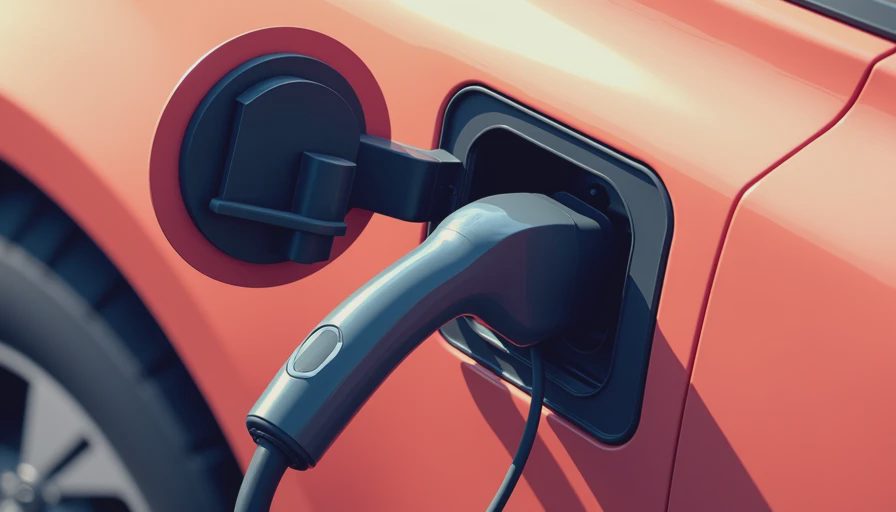
Confirm the connector before leaving. Most newer electric vehicles sold in the United States use either a J1772 connector for Level 2 charging, a CCS connector for many DC fast chargers, or a Tesla connector known as NACS. Adapter support is vehicle-specific. An adapter that works for AC charging does not automatically make a car compatible with every DC station, so a screenshot of the plug type is more useful than a vague “EV charger nearby” label.
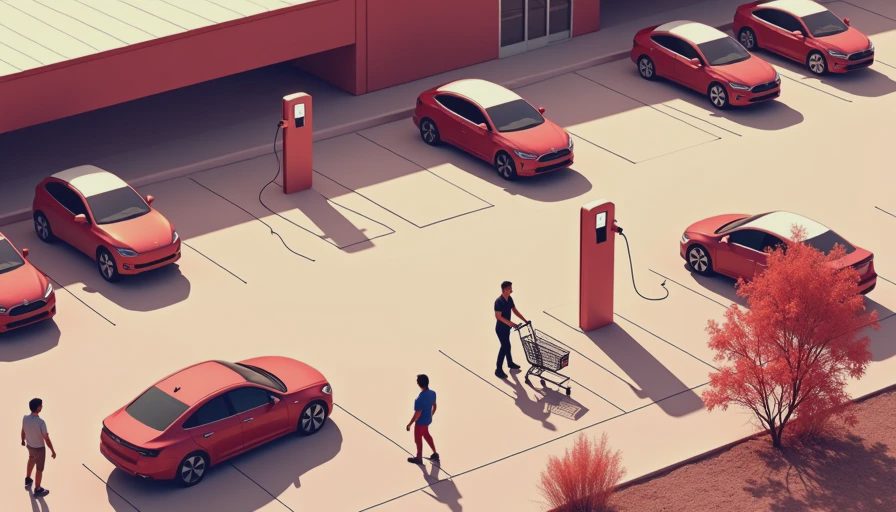
Membership is another variable. Some Costco EV charging stations have historically been listed through outside networks or limited local programs rather than as a single nationwide Costco service. That means a Costco membership may get you into the warehouse, but it does not necessarily unlock the charger or determine the session price. Look for payment instructions on the unit, then check whether the network accepts a credit card, mobile wallet, RFID card, or app account.
How charging cost and time actually work
The price shown in an app may be based on energy, time, a session fee, or a combination. A rate such as 40 cents per kilowatt-hour sounds straightforward, but idle fees can begin after charging ends, and some locations use different rates during busy periods. A station with a lower energy price can still be the expensive choice if you leave the car connected while walking through a warehouse.
For a simple estimate, multiply the energy added by the posted rate and then add any session or parking charges. Adding 30 kilowatt-hours at 40 cents per kilowatt-hour produces a $12 energy cost before taxes or fees. If your vehicle consumes about 3 miles per kilowatt-hour, that energy represents roughly 90 miles of driving under similar conditions. Cold weather, highway speed, roof cargo, tire pressure, and cabin heating can reduce the real-world result.
Time needs the same practical treatment. A vehicle advertised with a peak charging rate will not hold that rate through the entire session. Battery preconditioning, a warm pack, and a low starting state of charge can improve the first part of the stop. If the car begins at 55 percent, the final minutes may be inefficient compared with stopping at 70 or 80 percent and continuing to another reliable charger.
Comparing Costco with nearby charging options
Costco EV charging stations are attractive when the location aligns with an errand, but convenience should not hide the opportunity cost. A station at a grocery store may offer a slower charger with no extra detour. A dedicated fast-charging site from Tesla Supercharger, Electrify America, EVgo, or ChargePoint may have more stalls and clearer status data, though prices and connector access differ by location and vehicle.
Compare the complete stop, not just the advertised charging speed. Record the route distance, expected queue, number of operating stalls, lighting, restroom access, and whether the site is open during your travel window. A five-minute detour to a dependable four-stall site can be better than arriving at a single occupied charger beside a busy parking lot. Engineers already know this as latency management; families experience it as “why are we still here?”
For road trips, keep a fallback station in the route plan. Use the vehicle's navigation and a second app to confirm that the backup is reachable with a conservative battery buffer. Do not plan to arrive with one percent remaining because a station's live status is not a guarantee. Software dashboards can lag, payment terminals can fail, and a tow truck is a remarkably inefficient charging strategy.
EV charging and insurance considerations
Charging behavior also connects to vehicle insurance, even though a charger itself is not an insurance policy feature. Comprehensive and collision coverage generally address different risks to the vehicle, subject to the policy deductible and exclusions. Collision coverage is typically relevant when the car hits another vehicle, object, or structure. Comprehensive coverage commonly applies to non-collision losses such as theft, vandalism, hail, or certain animal strikes.
Damage to a portable charging cable, adapter, or wall-mounted home equipment can be treated differently from damage to the car. Some items may fall under an auto policy, while permanently installed equipment may relate to homeowners or renters coverage. The answer depends on ownership, how the item was damaged, and the policy language. Photograph expensive adapters, keep receipts, and ask the insurer a direct question before assuming every charging accessory is covered.
A claim can also involve the deductible. If a replacement cable costs $300 and the applicable deductible is $500, filing a claim may not make financial sense. Conversely, a damaged charging port or body panel can cost substantially more than a deductible. Comparing quotes from providers such as GEICO, Progressive, State Farm, or regional insurers is useful, but compare liability limits, comprehensive and collision deductibles, rental coverage, and EV-specific assistance rather than choosing solely by monthly premium.
A repeatable charging-stop workflow
Before departure, open two map sources and search the full warehouse address. Confirm the connector, network, operating hours, payment method, and recent status. Set a minimum arrival battery level that leaves room for weather, traffic, and an unavailable stall. If the stop is your only option, identify a backup within realistic range rather than relying on hope and a colorful app icon.
At arrival, inspect the stall and cable before plugging in. Note the station ID, photograph the screen if an error appears, and check that the connector locks correctly. Start the session through the required method, then confirm that energy is flowing in the vehicle display and the network app. If the session fails, record the error code and move to the backup instead of repeating the same failed action indefinitely.
After charging, save the receipt and disconnect promptly. Review the final kilowatt-hours, total cost, and minutes used. That small log turns a frustrating stop into useful evidence for your next route. It also reveals whether a charger is genuinely convenient or merely located near a warehouse you already planned to visit.
Costco EV charging stations can be a sensible part of an EV routine when the data is current and the stop fits the route. Verify the hardware, calculate the full cost, protect your time with a fallback, and review insurance coverage for the car and charging equipment. The best station is not always the closest pin; it is the one that delivers predictable energy without turning a routine errand into a firmware debugging session.
No letters yet — be the first guest to write.